
How To Build And Deploy AI Agents With Salesforce Agentforce
4.9 out of 5 based on 15645 votesLast updated on 18th Sep 2026 28.4K Views
.png)
- Bookmark

Agentforce has a testing console that shows you exactly which topic the agent picked and why. If it picked the wrong one.
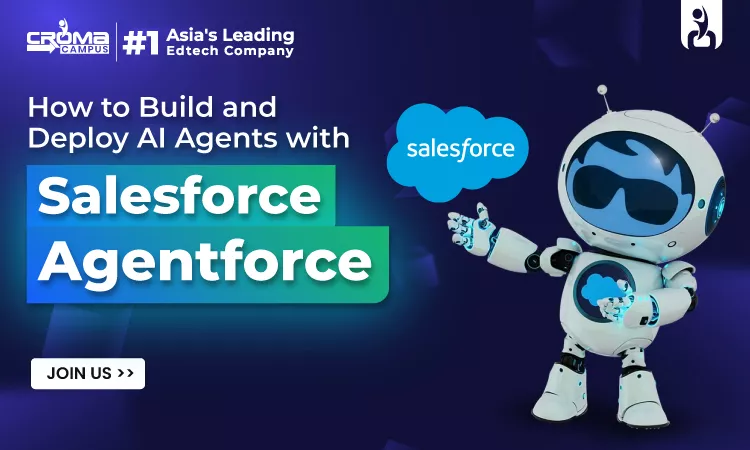
Customers are the king of the market, so businesses need to give priority to them. So they don’t want to wait in the queue or ask something simple and support the teams that don’t want to answer the same five questions all the time. This is the gap Salesforce is trying to close with the Agentforce. This is a platform that can be used for building AI Agents that can actually do the things inside the CRM instead of just chatting about them.
If you work with Salesforce in any capacity, this is worth learning properly. It's not a small feature update. It changes how support, sales, and service teams operate day to day. In this article, we'll go through what Agentforce is, how to build an agent step by step, what usually goes wrong, and where you can pick up the right skills through Salesforce Training if you want to get good at this.
What Is Salesforce Agentforce, Really?
Most chatbots you've dealt with follow a script. You pick from a menu, or the bot searches a help article and hands it to you. Agentforce is different. It connects an AI model to your actual Salesforce data your cases, orders, accounts, knowledge base and lets the agent decide what to do based on that data.
So instead of just telling a customer "here are three articles that might help," an Agentforce agent can look up their order, check if it's eligible for a return, apply the company's refund policy, and process it. No human needed for that particular case.
This is a big shift for how CRM teams work. Instead of manually sorting through every case or lead, teams start building and supervising agents that do the routine stuff automatically. That's why more people are signing up for a Salesforce Agentforce Course right now it's a genuinely new skill, not just an extension of what admins already know.
The Basic Building Blocks
Before you access any Agent Builder, it helps to know the pieces you're working with.
Topics
These are basically the subject areas an agent is allowed to handle "Order Status," "Billing Questions," "Return Requests," that kind of thing. Keep each topic narrow. An agent that's supposed to handle everything at once ends up confused about everything.
Actions
This is what the agent actually are doing and this is what includes pulling the record, updating the field and running the flow, calling an Apex classes as well as hitting an outside API. This is the part that can turn a chatbot int something best.
Instructions
These are plain-English rules you write for each topic, telling the agent how to behave what tone to use, when to escalate, what it should never do on its own (like refunding a large amount without approval).
Basic data is just the real information the agent pulls from your records, your knowledge articles so it's not guessing answers.
The model layer is the AI itself, sitting on top of Salesforce's trust and security layer, doing the actual reasoning about what the customer needs and which action fits.
Building an Agent, Step by Step
Step 1: Get specific about the problem
Don't start with something vague like "handle customer support." That's too broad and the agent will struggle. Instead, pick something narrow: "answer order-status questions and let customers cancel orders placed less than 24 hours ago." A tight scope now saves you a lot of headaches later.
Step 2: Clean up your data first
An agent is only as good as what it's reading from. Before building anything, go through your data:
- Get rid of duplicate records
- Update your Knowledge articles so they're actually current
- Check that the fields your agent will rely on (on Cases, Orders, Contracts) are filled in correctly
- If you're using Data Cloud, make sure customer profiles are unified across systems
Most agents that underperform after launch aren't failing because of bad AI they're failing because the underlying data was messy to begin with.
Step 3: Set up your topics
In Agent Builder, create a topic for each problem you scoped out in Step 1. Give it a name, describe when the agent should use it, and write out instructions in plain language.
For example, a "Billing Question" topic might say something like: "If a customer doesn't recognize a charge, check the Order History before replying. Never show full card numbers only the last four digits."
Step 4: Set up the actions
This is where the actual technical work happens. Depending on what you need, actions can be:
- Standard actions that come built in, like pulling up a case or updating a contact
- Flow-based actions for custom logic built with Salesforce Flow
- Apex-based actions when the logic is too complex for Flow alone
- External actions that connect to outside systems through MuleSoft or a REST API
If your agent needs to write data back or run multi-step logic, you'll need some development skill here which is really where a solid Salesforce Developer Course pays off. Reading data is easy to set up with clicks; writing data and triggering real business processes usually needs actual code behind it.
Step 5: Test with real, messy language
Once your topics and actions are ready, test the agent with the way people actually type not the neat, textbook version of a question. Someone asking "where's my stuff" should trigger the same response as "can you tell me my order status."
Agentforce has a testing console that shows you exactly which topic the agent picked and why. If it picked the wrong one, it's usually because two topics were too similar, or your instructions weren't clear enough about when to use which.
You May Also Read Related Blogs
Salesforce Interview Question Answers
What Is Salesforce Storefront Next?
Step 6: Add safety rules
Underneath everything, Salesforce's Einstein Trust Layer handles things like data masking and toxicity checks automatically. But you still need to set your own rules on top of that:
- Require approval for risky actions, like large refunds or contract changes
- Set clear rules for when the agent should hand off to a human
- Put limits on how many actions an agent can take in one conversation
Don't skip this. It's the difference between an agent that's genuinely useful and one that confidently does something it shouldn't have.
Step 7: Roll it out somewhere
Agents can go live on your website chat, your Experience Cloud portal, Slack, WhatsApp, or even voice channels. Most teams don't push straight to customers they run the agent internally first, letting their own support staff use it and catch problems before real customers ever see it.
Step 8: Keep watching and adjusting
Once it's live, the real work starts. Salesforce gives you analytics how often the agent solved something without help, where it got stuck, where people gave up. Use that to fix weak topics, add missing actions, or split up anything that's too broad.
Where CPQ Comes Into This
A lot of companies running Agentforce are also running Salesforce CPQ for their pricing and quoting. And there's real overlap here worth knowing about. If your agent is helping with a sales conversation, it might need to generate a quote, apply a discount, or check whether a product bundle is even allowed.
Getting this right means understanding how CPQ's price rules and product rules actually work behind the scenes not just what shows up on screen. That's why people building sales-focused agents often pick up Salesforce CPQ Training alongside their Agentforce learning. An agent that doesn't understand your pricing rules will generate quotes that look fine but break company policy, and that just creates more work than it saves.
Mistakes People Keep Making
- Making topics too broad. One topic trying to cover ten different questions will keep picking the wrong one. Split it up.
- Skipping the data cleanup. No amount of clever setup fixes an agent that's reading from bad records.
- Only testing with clean questions. Real customers don't talk like a manual. Test with how people actually write.
- Forgetting the human handoff. Every agent needs a clear point where it stops and passes the conversation to a person.
- Thinking deployment is the end. It's not. Agents need regular check-ins, just like any other system you run.
Why It's Worth Learning This Properly
Agentforce pulls together a few different skills at once knowing your CRM data, some Flow and Apex, writing clear instructions for the AI, and understanding the guardrails around it. You can try to figure all this out from random blog posts and trial and error, but it takes a lot longer than it should.
Related Courses:
Why Take Training in Noida?
This is where proper Salesforce Training helps. A good course walks you through Agent Builder, topic setup, actions, and deployment in order, with actual hands-on practice instead of just slides. If you're based around Delhi NCR, a solid Salesforce Institute in Noida can give you that in person real mentors, lab time, and projects you actually build yourself, not just watch someone else build.
If you're coming from a coding background and want to go deeper into the technical side writing custom actions, connecting external systems, working with Apex a proper Salesforce Administrator Training gives you the foundation that makes advanced Agentforce work possible.
And if you want to go straight at this specific skill rather than piecing it together, a dedicated Salesforce Agentforce Course is the most direct way in covering agent design, topics, actions, and safe deployment in one structured path instead of learning it the hard way on a live project.
Conclusion:
If you are looking to build an AI agent in the Salesforce it is not as simple as typing some instructions into a builder. This needs clean data, right topics and well-built actions. If you are getting this right then you genuinely can offer your customer the right answers. Giving wrong answer can leave you with an agent that confuses customers and create more cleanup work than this saves. The difference usually comes down to how well the person building it actually understands the platform which is exactly why proper training.
Subscribe For Free Demo
Free Demo for Corporate & Online Trainings.
Course Features
 Reals Life Practical & Case Studies
 Assignments
 Lifetime Access
 Expert Support
 Global Certification
 Job Portal Access
RELATED BLOGS

How To Configure Einstein Trust Layer In Salesforce Agentforce
How To Write Bulkified Apex Code In Salesforce
How To Build And Deploy AI Agents With Salesforce Agentforce

What Is Salesforce Agentforce Used For? Interview Questions & Answers

Salesforce Agentforce Course For High-Paying CRM Jobs | Step By Step Guide
What Is Salesforce Storefront Next?
What Is Salesforce Multi-Agent Orchestration? The Biggest Feature Of 2026

What Is Salesforce Data Cloud? Why It's The Most In-Demand Skill Of 2026?
What Are Salesforce Lightning Web Components (LWC)?
What Can Salesforce & Agentforce Sales Agent Actually Do For Sales Teams?

What Is Salesforce Trailhead? Step-by-Step Guide
 +91-828 706 0032
 +1 (782) 819-0044






 Interested in Course?




.webp)
.webp)

.png)


