whatsapppopupnewiconGUIDE ME
Caesar II Online Course

Caesar II Training Online

Our Caesar 2 Training focuses more on practical learning than theory. Instead of only reading about piping stress you will work on real projects, create piping models, perform stress analysis, & understand how industries use Caesar II software in daily engineering work.

Duration: 8 – 10 weeks | Mode: Live + Recorded Videos

Check Caesar II Course Demo Video

Check our Caesar II Course Demo Class to experience real-time training before you enroll.

Our Recently Placed Students in Caesar II

Ritesh

Placed at Worley

Deepak

Placed at Engineers India Limited

Prashant

Placed at Jacobs

Sandeep

Placed at Bechtel

Rohan

Placed at Petrofac

Monika

Placed at Fluor

Kavya

Placed at Technip Energies

Radhika

Placed at L&T Energy

About the Caesar II Training

Pipe stress analysis is an important part of industries like oil & gas, power plants, chemical plants, refineries, EPC companies, and manufacturing. Companies need engineers who can analyze piping systems and make sure they are safe before installation.

The Caesar ii Certification Course will enable you to gain some practical experience on what companies expect from a pipe stress engineer. After this training, you will learn how to model pipes, apply loads, conduct stress analyses, and write engineering reports.

Training Highlights
  • Learn industry-standard software
  • Understand pipe stress analysis from basics
  • Work on live industry projects
  • Improve engineering problem-solving skills
  • Learn international piping standards
  • Practice with assignments
  • Build project experience

What You Get

  • Easy-to-understand study notes
  • Step-by-step practical exercises
  • Practice piping models
  • Real project files
  • Assignments after every module
  • Recorded class sessions
  • Sample stress reports
  • Interview questions and answers

Course Design & Approved By

Nasscom & Wipro

What Will You Learn in a Caesar 2 Training

Starting from the basics, the Caesar II Course takes you through all the important topics used in pipe stress analysis. Every topic is explained with practical exercises so that you understand not only the software but also how it is used in real engineering projects.

Core Modules Covered

  • Introduction to Pipe Stress Analysis
  • Caesar II Software Overview
  • Software Installation and Setup
  • User Interface
  • Pipe Modeling
  • Material Properties
  • Pipe Specifications

Advanced Topics & Projects

  • Wind Load Analysis
  • Seismic Load Analysis
  • Equipment Connections
  • Nozzle Load Analysis
  • Stress Reports
  • Code Compliance Checking
  • ASME Code Basics

Download Curriculum

Get a peek through the entire curriculum designed that ensures Placement Guidance

Course Design By

nasco wp

Course Offered By

Why Choose Our Caesar II Course Material & Resources

  • Easy-to-understand study notes
  • Step-by-step learning material
  • Practice piping models
  • Sample project files
  • Module-wise assignments
  • Real industry case studies

Benefits of Joining Caesar II Software Training

  • Learn from industry experts
  • Live online classes
  • Hands-on software practice
  • Real-time industry projects
  • Practical assignments
  • Doubt-clearing sessions
  • Interview preparation
Learners Reviews

“The Caesar II Training was very practical. Every class included hands-on exercises, so learning never felt difficult.”

— Priya, Piping Design Engineer

“The Caesar ii Online Training helped me understand load cases, supports, and stress reports. The trainer explained everything step by step.”

— Neha Singh, Graduate Engineer

“The best part of the Caesar II Software Training was the live projects. Instead of only learning theory,”

— Rohit Kumar, Design Engineer

“I wanted to move into piping engineering, so I enrolled in the Caesar II Course. The trainer never rushed through the topics.”

— Sneha Patel, Mechanical Engineer

“The Caesar II Training was more practical than I expected. Every topic included hands-on exercises.”

— Ankit Verma, Piping Designer

“I joined the Caesar II Online Course with no pipe stress analysis experience. The trainer explained every topic clearly and simply.”

— Rahul, Mechanical Engineering
Caesar II – Country-wise Job Profiles & Salary Guide

Common Job Roles:

  • Pipe Stress Engineer
  • Piping Design Engineer
  • Mechanical Design Engineer
  • Stress Analysis Engineer
  • Piping Layout Engineer
  • Plant Design Engineer

Average Salary Range:

  • INR 4 LPA - INR 7 LPA for freshers
  • INR 7 LPA - INR 12 LPA with experience
  • INR 15 LPA - INR 25+ LPA for senior roles

Top Job Profiles:

  • Pipe Stress Engineer
  • Piping Engineer
  • Mechanical Engineer
  • Plant Design Engineer

Average Salary Range:

  • $75,000 - $95,000 per year for beginners
  • $100,000 - $135,000 per year with experience
  • $145,000+ per year for senior roles

Top Job Profiles:

  • Pipe Stress Engineer
  • Mechanical Engineer
  • Piping Engineer
  • Design Engineer

Average Salary Range:

  • £38,000 - £50,000 per year for freshers
  • £55,000 - £80,000 per year with experience
  • £90,000+ per year for senior roles

Top Job Profiles:

  • Pipe Stress Engineer
  • Mechanical Design Engineer
  • Plant Engineer
  • Piping Engineer

Average Salary Range:

  • EUR 55,000 - EUR 70,000 per year for beginners
  • EUR 75,000 - EUR 100,000 per year with experience
  • EUR 110,000+ per year for senior roles

Enroll Now

Begin your learning process with the Caesar 2 Training where you can learn the skills of pipe stress analysis using live classes, assignments, and industrial projects.

About the Trainer

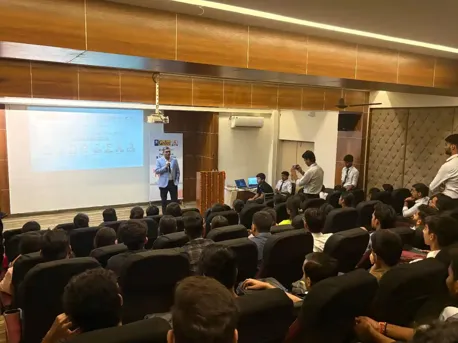
Caesar 2 Online Training is provided by professionals from the industry having experience in piping and plant engineering projects. Learn software concepts and core principles.
  • Industry experienced trainers
  • Step-by-step learning
  • Live online sessions
  • Practical assignments
  • Real-time industry projects
  • Doubt-clearing sessions
  • Interview preparation
Frequently Asked Questions

Yes. In this Caesar II Online Course, every topic has been started from scratch. Thus, even if you do not have any prior knowledge about software, you can understand all the topics very easily.

This Caesar II Course covers pipe stress analysis, piping model, load case, supports, stress report, nozzle loading, code compatibility, and live projects.

This Caesar II Training is a practical training. Every module comprises practical training, assignments, and projects.

Yes. During the Caesar 2 Training, you will be working on live projects that use actual piping systems of the industries.

Yes. The Caesar II Software Training covers interview preparation, resume building, mock interviews, and placement.

Yes. Every live class of this training has been recorded for you to watch again in case of need.

No. The Caesar ii Online Training is designed from the scratch for beginners.

The duration of the Caesar ii Online Training Course is only a few months based on the timings of the classes and practice time of the learner.

Yes. Once you have completed the Caesar II Online Course successfully, you will get a certificate.

Yes. Caesar II Training offers you interview guidance and resumes along with placement assistance.

Yes. The Caesar 2 Online Training is meant for both working professionals and students with flexible timing.

During the Caesar II Software Training, you will be doing practical piping projects such as pipe routing, pipe support modeling, thermal expansion analysis, equipment nozzle analysis, and complete stress analysis.

No. You only need a basic laptop to run the software which is taught in the Caesar II Course. The instructor will help you install the software too.

Yes. There are always assignments and practice exercises in each module in Caesar II Online Course to increase your understanding and confidence.

You can ask your queries in the live classes. There are special doubt clearing sessions in Caesar II Training so that all learners get their doubts cleared.

Yes. The Caesar 2 Training includes codes related to piping, stress analysis, and industry practices in the field of engineering.

Yes. The Caesar ii Online Training is described using very clear language that anyone interested in studying pipe stress analysis can easily grasp through consistent practice.

Yes. The projects done in Caesar II Online Course will enhance your resume and portfolio, and thus help you in future job interviews.

Yes. All the subjects covered in the Caesar II Course have practical software demonstrations that include hands-on sessions to give you practical knowledge.

After taking Caesar II Training, you can apply for the positions of Pipe Stress Engineer, Piping Design Engineer, Mechanical Design Engineer, Plant Design Engineer, and Stress Analysis Engineer.

CURRICULUM & PROJECTS

Caesar II Training Program

    Piping code theory basics

    Primary and secondary stresses

    Creating input data

    Design for piping loads

    Modelling of piping systems in CAESAR II

    Editing the model

    Supporting of piping systems (support types)

    Sustained and expansion stresses

    Design code requirements (e.g. B31.3, B31.1)

    Assorted modelling, analysis and compliance topics:

    Resolution of overstress due to thermal expansion

    Friction effects

    Adding flexible connections (vessels)

    Assessing equipment allowable loads

    Combining piping systems

    Load case combinations

    Modelling and analysis of a transmission line

    Modelling and analysis of a jacketed riser

    List/edit modelling, jacketed pipe, wind and hydrodynamic loading

    Static seismic loads

    Analysis documentation and static analysis workshop

    Model generation, system evaluation, system re-design

Get full course syllabus in your inbox

    Basic stress concept

    Role of Stress Engineer

    Basic Stress Stain Theories

    Basic Engineering concepts required for stress analysis

    Theories of failure

    Concept of stress Range

    Load Cases

    Code Compliance for ASME B31.3

    Different types & functions of Pipe support

    Design system for Sustain, Expansion & Occasional Loading

    Nomograph

    Pipe Rack Loading

    Support span Calculations

    Preparing stress Critical line list

Get full course syllabus in your inbox

    Storage Tank-pump system modelling

    Column-heat exchanger model

    WRC-297 nozzle flexibility

    Theory of load case generation

    PSV force calculation/ Slug force

    Critical Systems viz.: Turbine; Pump; Column, Air Fine Cooler etc.

    Spring design & Modelling in CAESAR II

    Pump Calculation API 610

    Equipment Modelling

    Pipe Rack CAESAR II Model

    Column Piping System

Get full course syllabus in your inbox

    Theory of dynamic analysis of systems

    Solving field vibration problems using harmonic analysis

    Building a dynamic analysis model.

    Seismic analysis using the response spectrum method.

    Time history analysis, hammer loads

    Survey of transient load evaluation through a relief valve example

    Dynamic analysis workshop:

    • natural frequency calculation,
    • dynamic load factor verification,
    • slug flow modelling

    Interpreting dynamic analysis results.

    A survey of approaches to evaluating relief valve discharge.

    Evaluating transient loads with time history analysis.

Get full course syllabus in your inbox

Course Design By

naswipro

Nasscom & Wipro

Course Offered By

croma-orange

Croma Campus

Our Students' Projects
1787141376.jpg
EIL – Compressor Line Analysis Project.

Scenario: Performing stress analysis on compressor suction and discharge pipelines to maintain safe operating conditions.

Live Work
  • Created the compressor piping model
  • Applied sustained, thermal, and occasional loads
  • Added spring and guide supports
  • Checked equipment nozzle loads
  • Validated the final stress report

Outcome: Analyzed compressor piping and support systems.

1787141213.jpg
Jacobs - Heat Exchanger Nozzle Load Analysis

Scenario: Checking the loads acting on a heat exchanger nozzle to ensure the equipment remains safe during operation.

Live Work
  • Built the piping model
  • Connected piping to the heat exchanger
  • Applied pressure and temperature loads
  • Performed nozzle load analysis
  • Generated stress reports

Outcome: Reduced nozzle loads and improved flexibility.

1787141103.jpg
Bechtel - Support Optimization Project

Scenario: Finding the best support locations for a piping system.

Live Work
  • Added different support types
  • Compared stress results
  • Reduced excessive displacement
  • Prepared final reports

Outcome: Learned practical piping support optimization.

1787140957.jpg
Petrofac - Expansion Loop Analysis

Scenario: Checking how expansion loops reduce stress in long pipelines.

Live Work
  • Created expansion loops
  • Applied thermal loads
  • Compared stress values
  • Optimized pipe routing

Outcome: Learned the role of piping expansion loops.

1787140871.jpg
Worley - Pressure Vessel Connection Project

Scenario: Analyzing piping connected to pressure vessels for safe operation.

Live Work
  • Connected piping to equipment
  • Applied different load cases
  • Verified equipment loads
  • Reviewed stress reports

Outcome: Learned equipment safety checks in piping design.

1787140684.jpg
Fluor - Thermal Expansion Project Analysis

Scenario: Studying how pipelines expand when operating temperature increases.

Live Work
  • Created the complete model
  • Applied temperature conditions
  • Checked displacement values
  • Optimized support locations
  • Generated final reports

Outcome: Learned practical ways to reduce thermal stress.

1787140591.jpg
Technip Energies - Pump Nozzle Analysis

Scenario: Checking whether piping loads applied on a pump nozzle were within allowable limits.

Live Work
  • Built the piping model
  • Applied operating loads
  • Performed nozzle load analysis
  • Modified supports
  • Verified final results

Outcome: Learned piping impact on rotating equipment.

1787140414.jpg
L&T Energy - Pipe Rack Stress Analysis

Scenario: Analyzing the stress of pipelines installed on a pipe rack under different operating conditions.

Live Work
  • Created the piping model
  • Applied sustained and thermal loads
  • Added pipe supports
  • Performed stress analysis
  • Generated engineering reports

Outcome: Learned pipe rack analysis before installation.

Recent Caesar II Job Requirements
Mechanical Design Engineer

Company: Fluor

Location: Gurgaon, India

Experience: 1–3 Years

Required Skills: Pipe Stress Analysis, Support Design, Equipment Loads

Piping Design Engineer

Company: Technip Energies

Location: Chennai, India

Experience: 1–3 Years

Required Skills: Pipe Modeling, Caesar II, Engineering Drawings

Pipe Stress Engineer

Company: L&T Energy

Location: Mumbai, India

Experience: 0–2 Years

Required Skills: Pipe Stress Analysis, Caesar II Software, Piping Basics

Our Related Caesar II Courses

Comprehensive Caesar II courses tailored for skill development & career growth.
MS Project Online Course

Learn project planning, scheduling, resource management, tracking, and reporting with MS Project.

E3D Course

Learn E3D plant design, 3D modeling, piping, equipment layout, and project workflows.

SP3D Course

Learn 3D plant design, modeling, piping, equipment layout, and project workflows using SP3D.

Primavera P6 Course

Learn project planning, scheduling, resource management, and tracking using Primavera P6.

Who Can Enroll in a Caesar II Course
  • Why : The Caesar II Online Course starts from the basics, making it easy for fresh graduates to understand pipe stress analysis without previous experience.
  • Best Topics: Pipe Stress Basics, Software Navigation, Pipe Modeling, Load Cases, Stress Reports
  • Job Benefit: Learners can apply for entry-level piping and stress analysis roles after completing the course.
  • Why : The Caesar II Course helps mechanical engineers improve their knowledge of piping systems and stress analysis used in industrial projects.
  • Best Topics: Pipe Supports, Thermal Expansion, Equipment Loads, Code Compliance, Report Generation
  • Job Benefit: Mechanical engineers can move into pipe stress engineering and plant design roles.
  • Why : The Caesar II Training helps piping engineers improve their practical knowledge and perform detailed stress analysis confidently.
  • Best Topics: Load Cases, Nozzle Analysis, Support Optimization, Static Analysis, Project Documentation
  • Job Benefit: It helps engineers work on larger industrial piping projects with confidence.
  • Why : The Caesar 2 Online Training is ideal for professionals who want to upgrade their skills or move into piping stress analysis.
  • Best Topics: Advanced Stress Analysis, Equipment Connections, Expansion Loops, Industry Standards, Live Projects
  • Job Benefit: Professionals can improve their career opportunities and apply for higher-level engineering positions.
  • Why : Professionals involved in plant engineering can use the Caesar II Software Training to better understand piping behavior and improve project quality.
  • Best Topics: Plant Piping, Stress Reports, Support Design Equipment, Loads Code, Compliance
  • Job Benefit: The course helps professionals handle piping projects more efficiently and confidently.
×

For Voice Call

+91-971 152 6942

For Whatsapp Call & Chat

+91-9711526942
newwhatsapp
1
//