
Dynamics 365 Learning Roadmap – Beginner To Expert [2026]
5 out of 5 based on 16545 votesLast updated on 2nd Jul 2026 28.6K Views

- Bookmark

Expert certifications in Dynamics 365 are not for people who have only studied. Microsoft is direct about this. They are designed for people who have implemented.
![Dynamics 365 Learning Roadmap – Beginner to Expert [2026]](https://www.cromacampus.com/public/uploads/Blog/2026/07/week_1/dynamics-365-learning-roadmap-beginner-to-expert-6a352368e3370.webp)
Microsoft Dynamics 365 is used by thousands of companies to run their day-to-day business. Sales teams use it to track customers and close deals. Finance teams use it for accounts and reports. Operations teams use it to manage stock, purchasing, and supply chains.
Because so many businesses rely on it, people who know the platform are getting hired regularly. The demand is growing. But for most learners, the first question is also the hardest one where do I even begin? After taking Microsoft Dynamics Online Training, many of the companies offer an internship to the freshers. So, let’s begin discussing this roadmap that can help you get hired and implement your knowledge in practice:
Step-by-Step Learning Roadmap – Beginner to Expert:
Stage 1: Know What You Are Walking Into
Dynamics 365 is not one product. It is a collection of business apps that all work together on one platform.
It splits into two main sides:
The customer side (CRM):
Sales:
tracks lead, deals, and pipelines
Customer Service:
manages support cases and service teams
Marketing:
runs campaigns and customer journeys
Field Service:
schedules and manages on-site work
The back-office side (ERP)
Finance:
accounting, budgets, cash flow
Supply Chain:
inventory, warehouses, procurement
Commerce:
retail and e-commerce operations
Project Operations:
Project costing and delivery.
Both of these sides get connected by the MS Power Platform that can handle the shared data, automation, and reporting.
What this means for you:
Choose any one side as soon as possible because most professionals focus on just one side, CRM or ERP, not both. When you have an idea of which one may fit your background can save months of going in the wrong direction.
Stage 2: Build Your Foundation (Beginner)
Before you go through the Dynamics module, get familiar with the platform underneath it.
Start with these two exams:
- PL-900, Power Platform Fundamentals
- AZ-900, Azure Fundamentals, Dataverse, this is where all D365 data lives. Understanding tables, fields, and relationships makes you far more useful in customization and troubleshooting.
- Covers Power Apps, Power Automate, Power BI, and Dataverse
- Not difficult, but it gives you the common language for everything that follows.
Because the exam preparation material will teach you about the test content. If you have taken a proper Microsoft Dynamics Online Training, then this may teach you how the platform actually works, navigation, as well as the modules. Also, it offers knowledge about how everything gets connected. It will help you choose the direction to go.
Stage 3: Pick Your Path and Go Deeper (Associate Level)
Once you learn the basics, you will be able to delve into the selected area. This is where the phase of real learning begins.
Path A: The CRM Route
Good fit if you come from sales, customer service, or marketing backgrounds.
Certifications to target:
MB-210: Dynamics 365 Sales
- Managing leads, opportunities, and forecasting
- Sales pipeline configuration and automation
MB-230: Dynamics 365 Customer Service
- Case management and service agreements
- Omnichannel support and escalation workflows
MB-220: Dynamics 365 Marketing
- Campaign setup and email automation
- Customer journey mapping and lead scoring
Microsoft Dynamics CRM Online Training covers all three of these modules in depth. It goes beyond the exam syllabus into real configuration work, the kind that makes you useful on a client project, not just good at answering test questions.
Path B: The Finance and Operations Route:
It is a good choice if you are from the accounting, operations and supply chain backgrounds and have completed the Microsoft Dynamics 365 Finance and Operations course. MS Dynamics 365 can handle some of the most complex business processes of the platform, such as multi-company accounting, intercompany transactions, and regulatory reporting for large enterprises. It could be one of the highest paying skills in the MS ecosystem.
Certifications to target:
MB-300: Core Finance and Operations
- The gateway exam for the whole F&O path
- Covers shared platform features and foundational setup.
MB-310: Dynamics 365 Finance
General ledger, accounts payable, accounts receivable
Fixed assets, cash flow, and financial reporting.
MB-330: Dynamics 365 Supply Chain Management
Purchasing, inventory, and warehouse management
Manufacturing processes and production planning
Path C: The Business Central Route (SMB Focus)
Good fit if you plan to work with smaller or mid-sized businesses.
Dynamics 365 Business Central is Microsoft's modern version of Dynamics NAV: a product that has been running in small and mid-sized companies across Europe and beyond for years. Thousands of those businesses are now migrating to Business Central.
Microsoft Dynamics NAV Online Training offer you the background that can support these migrations. Also, you may learn how the Nav is being structured and how these maps to Business Central and what a typical project includes.
Certification to target:
MB-800: Business Central Functional Consultant Associate
- Setup, finance, sales, purchasing, and inventory
- The standard qualification for Business Central consultants
Stage 4: Go Hands-On Practice (Mid-Level)
Passing exams and being ready for a live project are two different things. This stage closes that gap.
Practice in a sandbox environment
- A sandbox is a practice version of Dynamics 365 where you can configure and test without breaking anything real
- Most training providers give access to one, use it daily, not just before exams
Skills worth adding at this stage:
- Power Automate, almost every D365 project involves workflow automation. Notifications, approvals, record updates. Learn to build and fix flows.
- Power BI businesses want dashboards. Knowing how to connect Dynamics data to Power BI and build clear reports gets noticed quickly.
If you are looking to gain the project-ready skills fast, then you can apply for the Dynamics 365 Course. Well, this course will cover the specific module with labs and exercises.
Stage 5: Reach Expert Level
Expert certifications in Dynamics 365 are not for people who have only studied. Microsoft is direct about this. They are designed for people who have implemented real projects and can draw on that experience.
The two expert certifications:
MB-700: Finance and Operations Solution Architect Expert
- For those leading full F&O implementations
- Covers system design, integration strategy, and architecture decisions
- Requires a relevant associate certification first
PL-600: Power Platform Solution Architect Expert
- For those designing solutions across Power Platform and Dynamics 365 together
- Requires a relevant associate certification first
Also Read Out This:
Microsoft Dynamics 365 Tutorial
Top 5 Microsoft Dynamics Courses
What Is Microsoft Dynamics CRM
What the expert role actually involves:
Well, this role is mainly about understanding what a business is looking for, not just what the buttons should be clicked.
- Making design decisions that hold up across modules and years
- It is about managing the integration with outsider party systems.
This level takes time. There is no shortcut that replaces doing the work on real projects.
Stage 6: Keep Up After You Certify
The platform does not stand still. Microsoft ships updates twice a year.
- Release Wave 1, April to September
- Release Wave 2, October to March
Each of the waves offers new features, updated functionality, as well as important changes to modules you have already idea of. All of these features that were launched in 2025 are still in use. So it is a clear signal towards the things that are moving fast.
What this means in practice:
- Most associate and expert certifications require annual renewal
- Renewals are done online and are shorter than the original exams
Where to Start Right Now?
If you are starting from zero in 2026, the line is straightforward:
- Sign up for Microsoft Dynamics Online Training to get the platform overview and find out which direction suits you
- Pass PL-900 and AZ-900 and confirm your foundation
- Build the skills in learning the Sandbox along with your studies.
- Work toward expert certifications after real project experience, not before.
Conclusion:
From the above discussion, it can be said that Dynamics 365 is not something that you can learn in a weekend. But it is not that complicated either, once you go step by step. You can learn to begin with platform basics. So choose a direction such as CRM, Finance and Operations, or Business Central. Build your certifications one at a time. Get hands-on in a sandbox. And keep up with the release waves after you certify. So the demand for professionals is real, and companies are in need of such people who actually know how to use this.
Subscribe For Free Demo
Free Demo for Corporate & Online Trainings.
Course Features
 Reals Life Practical & Case Studies
 Assignments
 Lifetime Access
 Expert Support
 Global Certification
 Job Portal Access
RELATED BLOGS
How MS Dynamics 365 Integrates All Modules Full Guide
50 Dynamics 365 Interview Questions And Answers
![Dynamics 365 Learning Roadmap – Beginner to Expert [2026]](https://www.cromacampus.com/public/uploads/Blog/2026/07/week_1/dynamics-365-learning-roadmap-beginner-to-expert-thumb-6a352368b576f.webp)
Dynamics 365 Learning Roadmap – Beginner To Expert [2026]
Types Of MS Dynamics With Full Interview Q&A Guide 2026
Top 5 Reasons To Start Using Microsoft Dynamics 365 Today
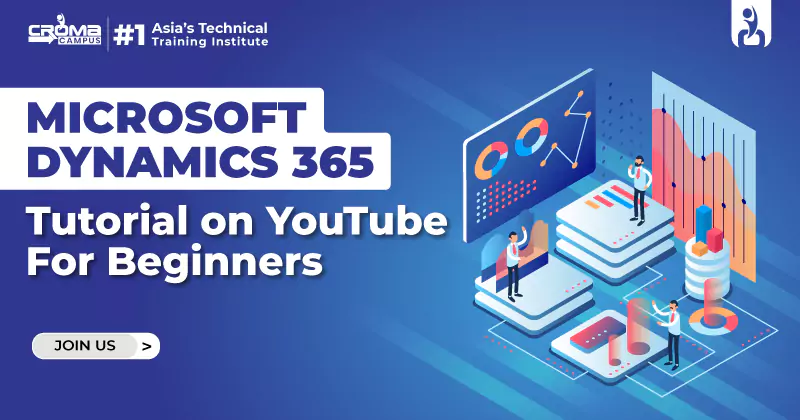
Microsoft Dynamics 365 Tutorial On YouTube For Beginners
What Is The Importance Of Advanced Excel In Business?
What Is Microsoft Dynamics CRM?
Importance And Future Scope Of Microsoft Business Intelligence

How To Become A Microsoft Certified Dynamics Developer?

What Are The Benefits Of Microsoft Dynamics?
 +91-828 706 0032
 +1 (782) 819-0044





 Interested in Course?




.webp)
.webp)

.png)


