
What Is Cloud Computing? Everything You Need To Know
4.9 out of 5 based on 15263 votesLast updated on 5th Dec 2025 28.4K Views

- Bookmark

Cloud Services are flexible and can grow or shrink based on demand. So when you need more power than you may need not plan for the weeks ahead
In the current time, cloud computing has changed the way we use technology. So whatever you are watching, whether it is Netflix, storing photos on Google Drive, or working on a shared document with someone across the world, you're using the cloud. All of these things can be assessed on the cloud. But you may wonder what this exactly means?
Let’s begin to understand this through this guide. You will get all the required information in this guide. Also, the people who are looking to grow their careers in this field can take the Cloud Computing Certification Course. This certification course can prove valuable for beginners, and they can also get certification at the end of the course.
Meaning of Cloud Computing:
Cloud Computing is offering the computing services that include the servers, storage, databases, networking, and software analytics, and intelligence—over the internet, commonly referred to as "the cloud”. Well, you may need to own and maintain the physical data centers and servers, organizations, and individuals for accessing the technology services on an as-needed basis from cloud providers.
The term “Cloud” is taken from the old network diagrams, where the internet was shown as a cloud to represent the complicated stuff happening behind the scenes that you don’t need to worry about. It is not complex to understand this if you take a Cloud Computing Course, where you can learn in detail about this. As Cloud computing is used everywhere nowadays, there are high chances of getting job opportunities in this field.
Other Related Courses:
5 Key Features of Cloud Computing
These are the 5 Key features of Cloud Computing in detail. So, taking the course from the Cloud Computing Course in Noida can help you understand cloud computing and work accordingly. Also, Noida is a great place to learn such skill-based courses.
1. On-Demand Self-Service
You can get what you need (like more storage or power) instantly by yourself—no need to call anyone or wait. This means you can start using services in minutes, just by logging into a dashboard or clicking a few buttons. It’s perfect for businesses that need to move fast.
2. Broad Network Access
You can access cloud services from almost any device—laptop, smartphone, tablet—as long as you're connected to the internet. Whether you're at home, in the office, or traveling, you can work and use your apps or data anytime, anywhere.
3. Resource Pooling
Cloud Providers such as AWS, Google Cloud, as well as Azure use big data centers where they can serve many users at once. Here, they share the physical resources, such as storage and processing power, across different customers. All of these can help in running everything effectively. This is how the users won’t need to understand anything except what they need.
4. Rapid Elasticity
Cloud Services are flexible and can grow or shrink based on demand. So when you need more power than you may need not plan for the weeks ahead or buy expensive equipment just in case. This gets adjusted automatically based on your needs instantly.
5. Measured Service (Pay-As-You-Go)
Cloud Platforms are helpful in tracking your usage, which includes storage, how many hours of computing, and how many of users. So this can help save your money, and you will pay only for what you use, kind of like an electric or water bill. Also, this can help in managing the costs in a better way, as well as avoiding wastage.
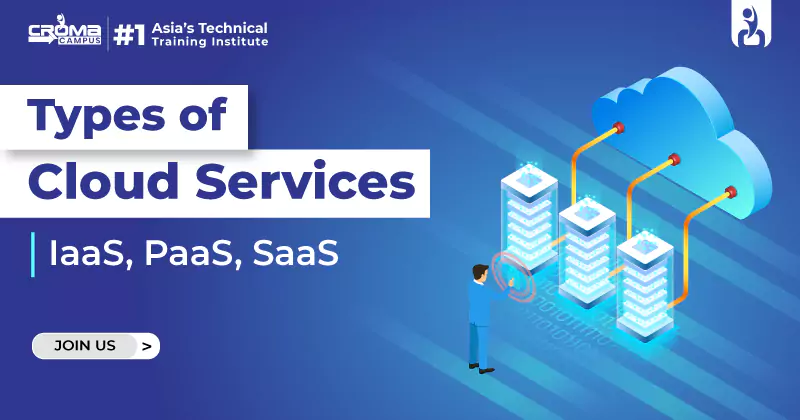
Types of Cloud Services:
Here, we have discussed the types of Cloud Services in detail. If you take the course from the Cloud Computing Training Institute in Delhi, then you can gain the knowledge through hands-on projects and real-world examples, preparing you for careers in cloud-based IT roles.
1. IaaS – Infrastructure as a Service
This offers you access to the basic building blocks such as virtual machines, storage, and networks. This is like renting a computer in the cloud, and you can manage most of the things by yourself, such as installing your apps or setting up security. But you will not have to worry about the hardware.
Example: AWS EC2, Microsoft Azure VMs, Google Compute Engine
Best for: Tech teams that want full control without owning servers.
2. PaaS – Platform as a Service
PaaS offers you a platform where you will build as well as operate your app without dealing with the servers, storage, or operating systems. Here, the provider will handle all of the things, and you just have to focus on the app.
Example: Google App Engine, AWS Elastic Beanstalk, Heroku
Best for: Developers who want to write code and deploy quickly.
3. SaaS – Software as a Service
This is ready-to-use software you access through a browser. You don’t install anything. Everything (software, security, updates) is managed for you.
Example: Gmail, Microsoft 365, Google Docs, Zoom, Dropbox
Best for: Everyone! Just log in and start using it.
Cloud Deployment Models
These are the three types of Cloud Deployment models which get used based on the requirements of the business. So if you get Cloud Computing Certification, then you can use any of them.
1. Public Cloud
These are cloud services offered to everyone over the internet by companies like AWS, Microsoft Azure, or Google Cloud. You share the infrastructure with other users (just like renting a room in a big hotel).
Benefits: Low cost, high scalability, easy to get started
Best for: Startups, growing businesses, and public apps
2. Private Cloud
A private cloud is limited to a single organization, where this can be hosted by the company’s own servers or managed by the provider. This offers control as well as security.
Benefits: High privacy, better control, full customization
Best for: Banks, government agencies, and companies with sensitive data
3. Hybrid Cloud
Hybrid Cloud is an integration of both public as well as private clouds. Here you can keep the important as well as sensitive tasks in your private cloud, and use the public cloud for less important things.
Benefits: Flexibility, balance between cost and control
Best for: Businesses needing both security and scalability.
4. Multi-Cloud
Multi-cloud is all about using the services from more than a single cloud provider, such as AWS and Google Cloud, together. This can help in avoiding dependency on a single provider.
Benefits: Avoids vendor lock-in, chooses the best tools from different providers
Best for: Large companies with complex or global needs
Benefits of Cloud Computing
Cloud computing offers many powerful benefits. That’s why more and more businesses, from small startups to large companies, are preferring the cloud. Here are the biggest advantages:
1. Saves Money
If your business is using cloud computing, then it may not need to spend a huge amount of money on buying the servers. Instead, they can take it on rent for what they need and pay only for what they are consuming. It will be just like a utility bill, where there will be fewer upfront costs and more flexibility to manage your budget.
2. Faster and More Flexible
In the older days, setting up the IT resources, such as servers or storage, took days or even weeks. But with cloud computing, it is possible in just minutes. This is the speed that can help the companies in launching the new products, services as well and features faster. Also, you can test the new ideas quickly, make the changes as well, and respond to the needs on time.
3. Global Access and Reach
Cloud providers like Amazon, Microsoft, and Google have data centers all over the world. This allows businesses to run apps or websites closer to their customers, no matter where they are. It means faster load times and better user experiences for people everywhere.
4. Reliable and Always On
Cloud systems are designed to be dependable. If something goes wrong in one data center, your data and apps can automatically switch to another location. This helps prevent downtime. Plus, cloud platforms include features like automatic backups and disaster recovery—so your data is safer, and your business can keep running even during a problem.
5. Strong Security
Cloud providers invest heavily in keeping their systems safe. They use strong encryption, firewalls, constant monitoring, and follow strict global security standards. Most companies simply can’t match this level of security on their own. So by using the cloud, businesses benefit from world-class protection without needing a huge security team.
Conclusion:
Cloud computing has brought a major change in the way we use technology. This makes powerful tools and resources available for everyone. This includes small businesses to large companies without needing expensive hardware or complex setups. As technology keeps growing, cloud computing will continue to play a big role in helping businesses innovate, grow faster, and stay ahead in the global market.
Subscribe For Free Demo
Free Demo for Corporate & Online Trainings.
Course Features
 Reals Life Practical & Case Studies
 Assignments
 Lifetime Access
 Expert Support
 Global Certification
 Job Portal Access
RELATED BLOGS
Which Are The Top Cloud Computing Trends To Watch Out For In 2026?
How To Download And Use AWS Kiro IDE: A Complete Guide
How Cloud Computing Is Powering The Future Of AI & ML?
What Is Cloud Computing? Everything You Need To Know

Cloud Computing Interview Questions And Answers
Top Cloud Platform Service Providers: A Simple Guide
Cloud Computing Skills To Boost Your Career
Cloud Computing Certification Cost In India
Popular Cloud Computing Techniques
Types Of Cloud Services: IaaS, PaaS, SaaS
Cloud Computing Salary In India
 +17828190044
 +91-971 152 6942





 Interested in Course?




.webp)
.webp)

.png)


