.svg)

40k
LearnersWeekend/WeekdayLive
Class
- 3 Live Project
- Self-Paced/ Classroom
- Certification Pass Guaranteed
 GUIDE ME
Develop hands-on expertise in CI/CD, containers, cloud, and automation through DevOps Training in Chennai.
 4.2/5
4.2/5 4.8/5
4.8/5 4.6/5
4.6/5 4.3/5
4.3/5 4.5/5
4.5/5In collaboration with

Online/Offline
Format
LMS
Life Time Access
we train you to get hired.

Learn the basics of DevOps
Understand Linux commands
Work with Git and GitHub
Manage source code
Build CI/CD pipelines
Use Jenkins for automation
Create Docker containers
Learn Kubernetes
Work with Terraform
Automate work using Ansible
Deploy applications on AWS
Monitor applications
Handle real DevOps projects
DevOps basics
Linux administration
Git and GitHub
Jenkins
Docker
Kubernetes
Terraform
Ansible
AWS
CI/CD pipelines
Monitoring tools
Real-time projects
Trainer-led classes
Practical lab sessions
Industry-based syllabus
Real-time projects
Hands-on practice
Latest DevOps tools
Daily assignments
Interview preparation
Resume support
Certificate guidance
Weekday and weekend batches
Lifetime access to learning material
Students of 12th Pass
Students of College
Graduates
Students of B.Tech
Students of BCA
Students of MCA
Students of B.Sc.
Students of M.Tech
Students of M.Sc.
Software Developers
System Administrators
Cloud Engineers
Testing Professionals
Support Engineers
IT Professionals
Working Professionals
Career Changers
Students
Graduates
Software Developers
Test Engineers
System Administrators
Cloud Engineers
Linux Professionals
Support Engineers
IT Professionals
Working Professionals
Career Shifters
Faster Software Delivery: DevOps helps companies release new features and updates in less time.
Better Teamwork: Developers and operations teams work together, making communication better and reducing mistakes.
Less Manual Work: Many daily tasks are automated, which saves time and improves productivity.
Better Software Quality: Regular testing and continuous integration help find issues before the software is released.
Easy Cloud Management: DevOps makes it easier to manage cloud servers, applications, and system updates.
DevOps Engineer
Cloud Engineer
Site Reliability Engineer
Build and Release Engineer
Linux Administrator
Automation Engineer
Infrastructure Engineer
Platform Engineer
CI/CD Engineer
AWS Engineer
System Administrator
Technical Support Engineer
Linux: Learn Linux commands, file management, and server basics.
Git: Learn version control and source code management.
GitHub: Store projects online and work with team members.
Jenkins: Create CI/CD pipelines and automate software deployment.
Docker: Build and manage containers for applications.
Kubernetes: Manage containers and scale applications easily.
Ansible: Automate server setup and software installation.
Terraform: Create and manage cloud infrastructure using code.
AWS: Deploy and manage applications on the cloud.
Prometheus: Monitor applications and collect performance data.
Grafana: Create dashboards to check application performance.
Visual Studio Code: Write and manage project files using a popular code editor.
CI/CD Pipeline Project
Docker Container Deployment
Kubernetes Cluster Setup
AWS Cloud Deployment
Infrastructure Automation
Server Configuration Project
Monitoring Dashboard Setup
Multi-Server Deployment
Web Application Deployment
Cloud Infrastructure Project
Practical Learning Involved
Daily Lab Practice
Tool Configuration
Building CI/CD Pipeline
Cloud Deployment
Demonstrations
Mini Projects
Projects
Final Project
Assignment Practice
Doubt Clarification Session
Interview Preparation
Certificate guidance
Assignment practice
Mock interview preparation
Resume building
LinkedIn profile preparation
Job opportunities
Practical DevOps skills
Real project experience
Linux knowledge
Cloud knowledge
CI/CD pipeline experience
Docker and Kubernetes skills
Automation knowledge
Communication skills
Professional certifications
Experienced faculty members
Course syllabus updated
Assignments related to practice
Projects in real time
Industry-specific training
Training schedule flexible
Batch timing available on weekdays & weekends
Online & Classroom Training
Guidance on obtaining certificate
Help in Resume Building
Mock Interview Preparation
Job assistance
Lifelong study material
Lab support
Career guidance
we train you to get hired.
we train you to get hired.
By registering here, I agree to Croma Campus Terms & Conditions and Privacy Policy
What is DevOps
DevOps Lifecycle & Ecosystem
DevOps Market Trends
DevOps Engineer Roles & Responsibilities
Introduction to Cloud Computing
Why DevOps on Cloud
Introduction to AWS
SDLC vs DevOps
Agile & Scrum Basics
Git Internals & Workflows
Branching Strategies (GitFlow)
Merge vs Rebase
GitHub Integration & PR workflows
Hands-on on Bitbucket and GitHub both with command line
Docker Architecture & Lifecycle
Dockerfile Optimization (Multi-stage builds)
Docker Compose (Multi-container apps)
Networking & Volumes
Kubernetes Architecture (Control Plane + Nodes)
Deployments, Services, Ingress
Pod creation
Deployment and Replicate deployment via Pipeline
Scaling & Auto-healing
Terraform Core Concepts & Workflow
State Management & Backends
Modules & Reusability
Multi-cloud Deployment
Setting up Docker Engine
Upgrading Docker Engine
Kubernetes Core Concepts
Kubectl common commands
Understanding Pods
Configure network on cluster nodes
Pod Networking Concepts
Setting up a cluster - Kubernetes Certificates
Perform basic Kubectl commands
Deploy pods and use INIT containers to pre-set an environment
Configure Kubernetes network using Calico
Use certificates to authenticate resources
Persistent Volume and Persistent Volume Claim
Access modes for volumes
Primitives for Persistent Volume Claim
Secrets and Config Maps in your pods
Storage classes
Headless services
Stateful Sets
Deploy Persistent Volume and Persistent Volume Claim
Use Secrets and Config Maps in your applications
Use Storage Class for dynamic storage allocation
Use stateful applications for sticky identities for pods
Deploy a highly available replicated MariaDB cluster
Authentication
Authorization
Kubernetes security primitives
Configure Network Policies
Security Contexts
Create and use Roles and Role Bindings
Define custom Egress and Ingress policies
Use probes and configure a restart policy for pods
Define privilege and access control using security contexts
Hosts and Users
Variables
Tasks
Handlers
Jinja2 Templates
Persistent Volume and Persistent Volume Claim
Access modes for volumes
Primitives for Persistent Volume Claim
Secrets and Config Maps in your pods
Storage classes
Headless services
Stateful Sets
Deploy Persistent Volume and Persistent Volume Claim
Use Secrets and Config Maps in your applications
Use Storage Class for dynamic storage allocation
Use stateful applications for sticky identities for pods
Deploy a highly available replicated MariaDB cluster
we train you to get hired.
Phone (For Voice Call):
+91-828 706 0032WhatsApp (For Call & Chat):
+91-828 706 0032Stories
success
inspiration
career upgrade
career upgrade
career upgrade
career upgrade
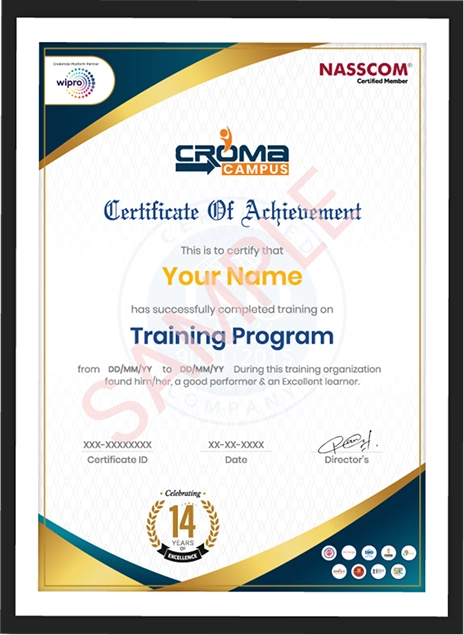
You will get certificate after
completion of program
You will get certificate after
completion of program
You will get certificate after
completion of program
in Collaboration with
Empowering Learning Through Real Experiences and Innovation
we train you to get hired.
Phone (For Voice Call):
+91-828 706 0032WhatsApp (For Call & Chat):
+91-828 706 0032Get a peek through the entire curriculum designed that ensures Placement Guidance
Course Design By
Course Offered By
Ready to streamline Your Process? Submit Your batch request today!
Yes. The DevOps course in Chennai begins with the basic concepts and gradually advances into advanced concepts. Even beginners can easily learn through this course.
No. Just computer fundamentals are necessary. In the DevOps training in Chennai, each concept is explained in a step-by-step manner.
Yes. Several real-time projects are done as part of the DevOps course in Chennai. It gives an idea of the application of DevOps in industries.
Yes. On completion of the DevOps training in Chennai, a course completion certificate will be given with certificate guidance.
Yes. DevOps course in Chennai provides weekday as well as weekend batches, hence even working professionals can attend this training without any hassle.
You will learn about Linux, Git, GitHub, Jenkins, Docker, Kubernetes, Ansible, Terraform, AWS, Prometheus, Grafana, and Visual Studio Code in your DevOps Training in Chennai.
Yes, as the DevOps Course in Chennai offers you placement assistance along with resume building, mock interviews, and interview preparation.
You will have to work on the projects such as CI/CD Pipeline, Docker Deployment, Kubernetes Cluster, AWS Deployment, Infrastructure Automation, Monitoring Dashboard, Server Configuration, and Web Application Deployment.
Any students, graduates, software developers, cloud engineers, system administrators, testing professionals, IT professionals, working professionals, and career switchers can opt for the DevOps Training in Chennai.
After taking the DevOps Course in Chennai, you will be eligible for job roles like DevOps Engineer, Cloud Engineer, Site Reliability Engineer, Build and Release Engineer, Linux Administrator, Automation Engineer, Infrastructure Engineer, Platform Engineer, CI/CD Engineer, AWS Engineer, and System Administrator.

Highest Salary Offered

Average Salary Hike

Placed in MNC’s

Year’s in Training

fast-tracked into managerial careers.
Get inspired by their progress in the
Career Growth Report.
FOR QUERIES, FEEDBACK OR ASSISTANCE
Best of support with us
Share some of your details and we will be in touch with you for demo details, and know about Batches Available with us!

For Voice Call
+91-971 152 6942For Whatsapp Call & Chat
+91-9711526942Share some of your details and we will be in touch with you for demo details, and know about Batches Available with us!














 Training Certificate is Govern By 12 Global Associations.







 Career Transition
 Career Gap
 Placement Activities
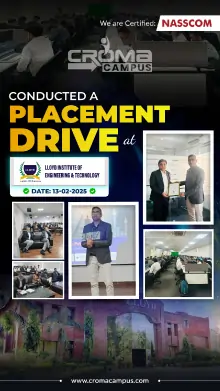
 Placement Drives
 Latest Hiring
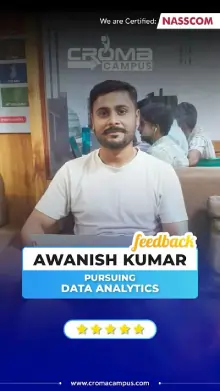
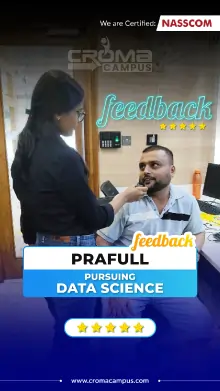
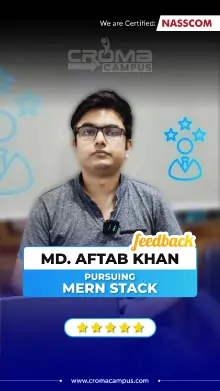
 Whats App Reviews
.webp)


.jpg)
.jpg)

.jpg)

.jpg)
.jpg)








.webp)













 +91-828 706 0032
 +91-828 706 0032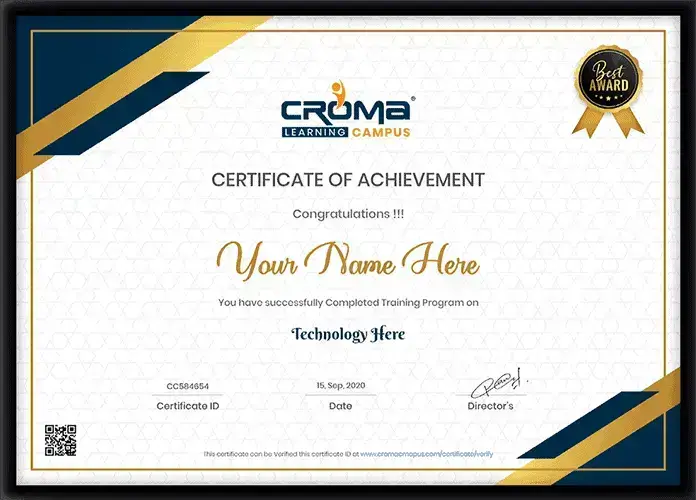




 Interested in Devops Training Program Course?
 +91-828 706 0032
 +1 (782) 819-0044




 Interested in Course?



.webp)
.webp)

.png)


