
10 Best Agentic AI Tools In 2026: Free & Paid Options Compared
4.9 out of 5 based on 16542 votesLast updated on 27th Aug 2026 28.6K Views

- Bookmark
Modern AI agent tools are a combination of specialized tiny models, vector databases, and execution sandboxes. Modular AI agent frameworks let developers build complex decision.
Work in the digital world has shifted from reactive to proactive. For companies, it was important that AI agents could run code, fix bugs, and talk to each other on cloud platforms without any staff telling them what to do. Thus, modern software development & operations rely on agentic AI tools to automate operations, speed up software engineering, and ease customer integration without manual intervention.
Agentic AI Tools are expanding in 2026. The companies start applying it to automate workflow. Whether you are a developer or a business leader, selecting the right tool is very important. If you want to learn it then, enroll in an Agentic AI Course. This course helps you in practicing on the tools and gives you real-time work experience.
What is an Agentic AI Tool?
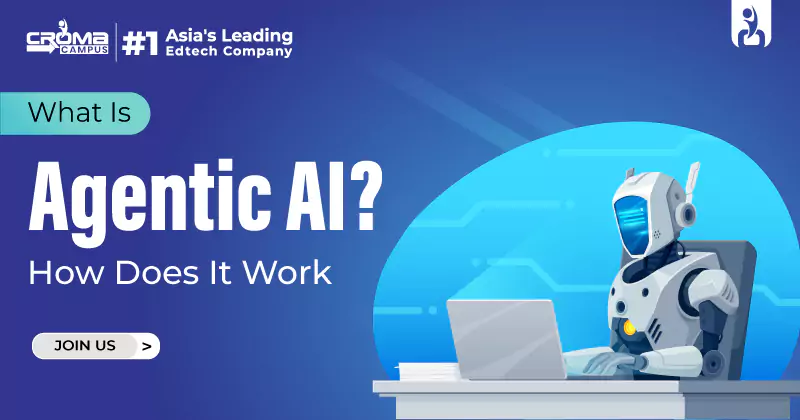
An agentic AI tool is a software program that can plan, deliberate, and execute multi-step work toward a goal, selecting its own sequence of actions rather than following a script. A classic automation follows a pre-defined action when a trigger happens. An agent is given an outcome and figures out the steps.
Modern AI agent tools are a combination of specialized tiny models, vector databases, and execution sandboxes. Modular AI agent frameworks let developers build complex decision loops, and no-code AI agent platforms let non-technical teams easily connect business apps.
Types of Agentic AI Tools
The choice of tool depends on your team’s programming expertise and organizational goals. Breaking the terrain down into three major categories:
- Developer Frameworks: Code-first AI agent frameworks allow developers full control over custom business logic, state memory, and multi-agent loops.
- Enterprise AI Agent Platforms: Comprehensive low-code AI agent platforms designed for large enterprises to implement secure and compliant workflows within their current business systems.
- No-Code Automation Builders: Visual, drag-and-drop workflow tools that allow non-technical business teams to construct custom agents using natural language.
10 Best AI Agentic Tools
LangGraph
LangGraph is the companion library available on the LangChain framework. It is used for building AI applications. It allows you to create a cyclic agent workflow that can loop, backtrack, and make decisions in the changing environment.
CrewAI
CrewAI employs a role-based agent design, with each agent having a persona, objective, allowable tools, and output format. The framework allows for agent coordination through organized task assignment and message passing, making it straightforward to reason about the responsibility of each agent.
Microsoft’s AutoGen
Microsoft AutoGen: An Open-Source Framework for Multi-Agent Conversational Systems. It allows numerous autonomous agents to interact with each other, discuss solutions, evaluate code, and work together to solve complicated software or data challenges.
Microsoft Copilot Studio
Microsoft Copilot Studio gives you a low-code environment for building agentic artificial intelligence systems in Microsoft 365. Microsoft Graph API connectivity agents run across SharePoint, Teams, Outlook, and Dynamics 365. Enterprise-grade governance, with tenant controls and data loss prevention baked in.
Gumloop
Gumloop is a platform for AI agents and process automation for all. It is intended to let you construct AI agents using basic natural language. It connects with MCP servers, its built-in connectors, and any LLM model.
Building an AI agent that can plug into your existing tech stack is so straightforward.
Salesforce AgentForce
Agentforce is an enterprise AI technology from Salesforce Agentforce Course that provides autonomous agents for CRM environments. It links directly to client data to resolve service tickets, qualify sales leads, and run marketing campaigns 24/7 without human intervention.
n8n
n8n is an open-source workflow automation tool with 350+ native integrations and the ability to incorporate LLM-based AI agents in visual workflows. It can be self-hosted, which is important for organizations with strong data sovereignty requirements.
StackAI
StackAI is an enterprise AI platform that lets you build AI workflows that can evaluate data and behave differently.
Simply said, it’s an AI agent builder intended for enterprise-level finance, risk-management and operations teams. And the platform provides you with all the tools you need, from workflows, interfaces, and various connectors to built-in security and support.
Flowise
Flowise is an open-source visual drag-and-drop tool developed on top of LangChain for rapid prototyping. Create bespoke LLM chains, autonomous agents, and RAG pipelines visually with modular nodes for developers and product teams.
AutoGPT
AutoGpt is one of the earliest autonomous AI tools. You give it a goal, it separates that into sub-tasks, searches the web, writes code, and iterates until it is done.
Comparison of AI Agent Tools
These agentic AI tools are also called AI agent tools. The below table describes the purpose and price of these tools.
| AI Agent Tool | Core Purpose | Paid or Free |
| LangGraph | Managing complicated, stateful code processes involving multiple agents. | Free (Open-source)/paid Cloud |
| CrewAI | Managing how specialized agents work together as a role-based team. | Free (Open-source)/ Enterprise paid |
| Microsoft AutoGen | Making conversational loops with multiple agents and coding helpers. | Free (Open-source) |
| Microsoft Copilot Studio | Making business agents with little code for Microsoft 365 environments. | Paid |
| Gumloop | Using a visual canvas to automate business processes that don't need code. | Paid Plans |
| Salesforce | Using automation to run CRM, help customers, and reach out to potential buyers. | Paid |
| n8n | Using both node-based process automation and AI to carry out steps. | Free trial, then paid |
| StackAI | Putting together enterprise-ready agent processes visually via governance. | Free trial, then paid |
| Flowise | Very fast making prototypes of visual LLM flows and custom agent nodes. | Free trial, then paid |
| AgentGPT | Running simple web-based research and goal-setting tasks on your own. | Free trial, then paid |
Benefits of Using Agentic AI Tools in 2026
Work Without Human Prompts
AI agents work continuously without any human instruction. It reduces the chances of errors. And work done timely and efficiently.
Other Related Course
Machine Learning Online Course
Reduce Operational Cost
As the AI agents work on their own, they do not need human intervention. It reduces the need for human resources. So the cost automatically goes down.
Better Scalability
It gives advantages to organizations, as they can manage a large volume of work without increasing the team.
Instant Software Integration
AI agents help in linking different platforms. It connects databases, CRMs, and email tools together automatically.
The bottom line
Agentic AI has made a huge step forward in business automation. Thanks to self-correction, execution tools, and autonomous thinking, they can do real work, not just write text. If you want your business to be faster, to save time, and to grow, you need to get the right tools for your business. This includes open-source frameworks such as LangGraph and CrewAI and no-code platforms like Gumloop and Copilot Studio.
FAQs
Q: How are Agentic AI tools different from traditional AI tools?
Traditional AI tools depend on a fixed script and work on that only. They do not entertain exceptions. Agentic AI tools based on reasoning. They navigate the variations and work according to the changing environment.
Q: Which AI Agent tool is best in 2026?
The best AI Agent tool depends on the purpose you are using it. Every tool has its own purpose. Selecting the right tool depends on your requirements. You need to understand the tool and your target to know what tool to learn.
Q: What AI agent frameworks are available to developers?
These are the most important open-source systems in 2026: LangGraph (state-based graphs), Microsoft AutoGen (multi-agent conversations) and CrewAI (role-based agent teams). All three require people who know how to code.
Q: Is it safe to use open-source AI agents with my business data?
Yes, as long as they are hosted on company-owned servers or European cloud infrastructure that is compliant with GDPR. Protection and maintenance, however, are the company's exclusive responsibility.
Q: What is the price of an AI Agentic Tool?
The price of an AI Agentic Tool varies based on the usage. Some are free in Open-Source only and others have a free trial with a paid plan after completing trial.
Subscribe For Free Demo
Free Demo for Corporate & Online Trainings.
Course Features
 Reals Life Practical & Case Studies
 Assignments
 Lifetime Access
 Expert Support
 Global Certification
 Job Portal Access
 +91-828 706 0032
 +1 (782) 819-0044





 Interested in Course?




.webp)
.webp)

.png)


