







whatsapppopupnewiconGUIDE ME

Master Big Data and Cloud Analytics with Expert-Led Databricks Course Training in Delhi at Croma Campus.

4.9 out of 5 based on 12545 votes
google4.2/5
Sulekha4.8/5
Urbonpro4.6/5
Just Dial4.3/5
Fb4.5/5

In collaboration with

400+

Corp. Tie-Ups

Online/Offline

Format

LMS

Life Time Access

Book A Free Counselling Session

we train you to get hired.

bag-box-form
Request more information_

  • Databricks Course in Delhi is designed for students, freshers and professionals who aim to equip themselves with modern data engineering skills. With growing technological advances, the volume of data processed by businesses is increasing exponentially. In response to this, the demand for individuals having knowledge about managing cloud platforms, high-speed data processing, and building efficient data pipelines arises.
  • Databricks Training in Delhi enables learners to have a deep understanding of the functioning of data management systems in different firms. Various sectors such as banks, retail applications, healthcare facilities, telecom corporations, and artificial intelligence enterprises leverage Databricks technology to conduct their data management and analytics operations.
  • This course begins with fundamentals and gradually progresses to the advanced level. At the initial stages, learners comprehend the functioning of data within a system. As the course progresses, learners gain knowledge about Spark processing, cloud platforms, streaming pipelines, and data optimization. At the end of the course, learners are capable of designing full-fledged data pipelines.
    • Learn how companies process large amounts of data

      Understand batch and real-time data pipelines

      Work on cloud-based Databricks environments

      Build practical ETL workflows

      Learn structured and unstructured data handling

      Understand distributed systems in simple ways

      Work on Spark-based data processing

      Learn practical cloud engineering skills

Databricks Course in Delhi

About-Us-Course

  • The main purpose of the Databricks Course in Delhi is to prepare learners for real jobs in cloud data engineering. The course does not focus only on theory. Instead, it teaches how data systems work in real company environments.
  • Students learn how to create pipelines, move data between systems, process streaming data, and manage cloud platforms. The training also helps learners understand how engineers solve data problems in companies.
  • Main Learning Goals
    • Learn distributed computing using Apache Spark

      Build ETL pipelines for large systems

      Understand Delta Lake storage management

      Learn streaming data processing

      Understand cloud integration using Azure and AWS

      Learn job scheduling and workflow automation

      Practice monitoring and debugging pipelines

      Prepare for technical interviews in data engineering

  • The focus is more on practical understanding instead of just learning commands.

  • The Databricks Training in Delhi gives strong practical exposure because data engineering is completely skill-based. Students work on live Databricks environments where they build and test pipelines.
  • The course also includes debugging practice, cloud deployment, and performance tuning. Students get experience working with streaming and batch datasets similar to real industry work.
  • Features Included
    • Live Databricks workspace practice

      Spark and Delta Lake hands-on training

      Real-time ETL pipeline creation

      Industry-based assignments

      Pipeline debugging sessions

      Data optimization practice

      Streaming and batch processing projects

      Azure and AWS cloud practice

      Coding and architecture assessments

      Real-world workflow understanding

  • The training explains how systems work internally so students understand practical data engineering properly.

  • The Databricks Classes in Delhi are suitable for almost everyone who wants to enter the data engineering field. Freshers, graduates, working professionals, and career switchers can join the course.
  • The course starts from basic concepts, so deep coding knowledge is not needed at the beginning stage. Even learners from non-technical backgrounds can understand the training if they have basic computer knowledge and logical thinking.
  • Who Can Join
    • Technical and non-technical graduates

      Freshers looking for IT jobs

      Working professionals changing careers

      Software developers moving into big data

      Data analysts learning cloud engineering

      Students interested in AI and cloud systems

      Learners with basic logical understanding

      Career switchers from other industries

  • The learning process is step-by-step so beginners can learn comfortably.

  • The demand for cloud data engineers is growing very fast. The Databricks Training in Delhi helps learners enter one of the fastest-growing technology fields in 2026.
  • Today, companies use cloud systems to process data quickly and make business decisions faster. Databricks is widely used in industries where huge amounts of data need to be managed daily.
    • Banking Transaction and fraud analysis

      Healthcare Patient data management

      E-commerce Customer behavior analytics

      Telecom Network monitoring

      AI Companies Machine learning pipelines

      SaaS Companies Cloud analytics systems

  • Cloud data engineering jobs
  • Big data engineering roles
  • AI and analytics infrastructure jobs
  • Real-time data processing work
  • Remote global job opportunities
  • Cloud automation projects
  • Product-based company roles
  • Long-term stable technology careers
  • This field is growing continuously because every company depends on data systems today.

  • The Databricks Training in Delhi follows a proper learning structure. Every module starts from basics and then moves toward advanced practical implementation.
  • Module 1
  • Big Data Basics
    • Introduction to big data

      Distributed systems basics

      Databricks workspace introduction

      Understanding data engineering flow

  • Module 2
  • Apache Spark Fundamentals
    • Spark architecture understanding

      RDD, DataFrame, and Dataset concepts

      Spark execution flow

      Driver and executor concepts

  • Module 3
  • ETL Pipeline Development
    • Data ingestion methods

      ETL workflow creation

      Batch data processing

      Data transformation concepts

  • Module 4
  • Delta Lake Concepts
    • Delta Lake architecture

      Data versioning

      Time travel concept

      Storage optimization methods

  • Module 5
  • Streaming Data Systems
    • Structured streaming basics

      Real-time pipeline development

      Event-driven systems

      Streaming data handling

  • Module 6
  • Cloud and Automation
    • Azure Databricks integration

      AWS Databricks setup

      Job scheduling systems

      Workflow automation basics

      CI/CD pipeline understanding

  • Module 7
  • Final Project and Interview Preparation
    • End-to-end project development

      Real industry workflow simulation

      Resume preparation support

      Technical interview practice

      System design discussions

  • Every module includes practical implementation along with concept understanding.

  • The Databricks Course in Delhi also helps students prepare for certifications that improve job opportunities. The training includes guidance for Databricks and Apache Spark certification preparation.
  • Students also work on projects that help build a strong resume and portfolio.
  • Certification Support
    • Databricks certification preparation

      Apache Spark certification guidance

      Mock tests and practice sessions

      Project-based evaluations

      Resume-ready project portfolio

      Technical interview preparation

      Practical assessment support

  • Certifications help learners show their skills during interviews.

  • Freshers completing the Databricks Training in Delhi can get good salary packages depending on their skills and project experience.
  • Candidates who understand Spark, SQL, cloud systems, and pipeline development usually get better opportunities.
    • Freshers 4 LPA to 10 LPA

      13 Years Experience 8 LPA to 16 LPA

      Senior Professionals 18 LPA and above

  • Salary Depends On
    • Spark and SQL knowledge

      Practical project experience

      Cloud platform understanding

      Pipeline debugging skills

      Real-time data handling knowledge

      Strong portfolio projects

      Technical interview performance

  • Cloud data engineering roles usually grow faster compared to many traditional IT jobs.

  • The Databricks Classes in Delhi help learners build long-term careers in cloud engineering and big data systems.
  • After gaining experience, professionals can move into advanced technical and leadership roles.
  • Career Roles
    • Junior Data Engineer

      Data Engineer

      Big Data Engineer

      Spark Developer

      Cloud Data Engineer

      Data Platform Engineer

      Data Architect

      Cloud Architect

  • Future Growth Areas
    • AI infrastructure engineering

      Distributed systems management

      Cloud architecture roles

      Analytics platform engineering

      Enterprise data systems

      Technical consulting opportunities

      Product-based company roles

      Independent startup opportunities

  • The field keeps growing because companies continue increasing their use of cloud and data technologies.

  • The Databricks Course in Delhi focuses more on practical learning instead of outdated theory-only teaching methods.
  • Students work on live projects and real cloud environments. The training also includes interview preparation, coding practice, architecture learning, and career guidance support.
  • Benefits of the Training
    • Real project-based learning

      Live Databricks and Spark practice

      Industry-focused cloud training

      Practical implementation approach

      Resume and portfolio support

      Technical interview preparation

      Guidance from experienced professionals

      Updated syllabus based on 2026 industry needs

      Flexible batches for students and working professionals

      Placement support assistance

  • The training helps learners understand how real company data systems work in practical environments.

Why Should You Learn Databricks?

Not just learning

we train you to get hired.

bag-box-form
Request more information

By registering here, I agree to Croma Campus Terms & Conditions and Privacy Policy

CURRICULUM & PROJECTS

Databricks Certified Data Engineer Associate Training Program

    Describe the relationship between the data lakehouse and the data warehouse.

    Identify the improvement in data quality in the data lakehouse over the data lake.

    Compare and contrast silver and gold tables, which workloads will use a bronze table as a source, which workloads will use a gold table as a source.

    Identify elements of the Databricks Platform Architecture, such as what is located in the

    data plane versus the control plane and what resides in the customer’s cloud account

    Differentiate between all-purpose clusters and jobs clusters.

    Identify how cluster software is versioned using the Databricks Runtime.

    Identify how clusters can be filtered to view those that are accessible by the user.

    Describe how clusters are terminated and the impact of terminating a cluster.

    Identify a scenario in which restarting the cluster will be useful.

    Describe how to use multiple languages within the same notebook.

    Identify how to run one notebook from within another notebook.

    Identify how notebooks can be shared with others.

    Describe how Databricks Repos enables CI/CD workflows in Databricks.

    Identify Git operations available via Databricks Repos.

    Identify limitations in Databricks Notebooks version control functionality relative to Repos.

Get full course syllabus in your inbox

    Extract data from a single file and from a directory of files

    Identify the prefix included after the FROM keyword as the data type.

    Create a view, a temporary view, and a CTE as a reference to a file

    Identify that tables from external sources are not Delta Lake tables.

    Create a table from a JDBC connection and from an external CSV file

    Identify how the count_if function and the count where x is null can be used

    Identify how the count(row) skips NULL values.

    Deduplicate rows from an existing Delta Lake table.

    Create a new table from an existing table while removing duplicate rows.

    Deduplicate a row based on specific columns.

    Validate that the primary key is unique across all rows.

    Validate that a field is associated with just one unique value in another field.

    Validate that a value is not present in a specific field.

    Cast a column to a timestamp.

    Extract calendar data from a timestamp.

    Extract a specific pattern from an existing string column.

    Utilize the dot syntax to extract nested data fields.

    Identify the benefits of using array functions.

    Parse JSON strings into structs.

    Identify which result will be returned based on a join query.

    Identify a scenario to use the explode function versus the flatten function

    Identify the PIVOT clause as a way to convert data from wide format to a long format.

    Define a SQL UDF.

    Identify the location of a function.

    Describe the security model for sharing SQL UDFs.

    Use CASE/WHEN in SQL code.

    Leverage CASE/WHEN for custom control flow.

Get full course syllabus in your inbox

    Identify where Delta Lake provides ACID transactions

    Identify the benefits of ACID transactions.

    Identify whether a transaction is ACID-compliant.

    Compare and contrast data and metadata.

    Compare and contrast managed and external tables.

    Identify a scenario to use an external table.

    Create a managed table.

    Identify the location of a table.

    Inspect the directory structure of Delta Lake files.

    Identify who has written previous versions of a table.

    Review a history of table transactions.

    Roll back a table to a previous version.

    Identify that a table can be rolled back to a previous version.

    Query a specific version of a table.

    Identify why Zordering is beneficial to Delta Lake tables.

    Identify how vacuum commits deletes.

    Identify the kind of files Optimize compacts.

    Identify CTAS as a solution.

    Create a generated column.

    Add a table comment.

    Use CREATE OR REPLACE TABLE and INSERT OVERWRITE

    Compare and contrast CREATE OR REPLACE TABLE and INSERT OVERWRITE

    Identify a scenario in which MERGE should be used.

    Identify MERGE as a command to deduplicate data upon writing.

    Describe the benefits of the MERGE command.

    Identify why a COPY INTO statement is not duplicating data in the target table.

    Identify a scenario in which COPY INTO should be used.

    Use COPY INTO to insert data.

    Identify the components necessary to create a new DLT pipeline.

    Identify the purpose of the target and of the notebook libraries in creating a pipeline.

    Compare and contrast triggered and continuous pipelines in terms of cost and latency

    Identify which source location is utilizing Auto Loader.

    Identify a scenario in which Auto Loader is beneficial.

    Identify why Auto Loader has inferred all data to be STRING from a JSON source

    Identify the default behavior of a constraint violation

    Identify the impact of ON VIOLATION DROP ROW and ON VIOLATION FAIL UPDATEfor a

    constraint violation

    Explain change data capture and the behavior of APPLY CHANGES INTO

    Query the events log to get metrics, perform audit loggin, examine lineage.

    Troubleshoot DLT syntax: Identify which notebook in a DLT pipeline produced an error,

    identify the need for LIVE in create statement, identify the need for STREAM in from clause.

Get full course syllabus in your inbox

    Identify the benefits of using multiple tasks in Jobs.

    Set up a predecessor task in Jobs.

    Identify a scenario in which a predecessor task should be set up.

    Review a task's execution history.

    Identify CRON as a scheduling opportunity.

    Debug a failed task.

    Set up a retry policy in case of failure.

    Create an alert in the case of a failed task.

    Identify that an alert can be sent via email.

Get full course syllabus in your inbox

    Identify one of the four areas of data governance.

    Compare and contrast metastores and catalogs.

    Identify Unity Catalog securables.

    Define a service principal.

    Identify the cluster security modes compatible with Unity Catalog.

    Create a UC-enabled all-purpose cluster.

    Create a DBSQL warehouse.

    Identify how to query a three-layer namespace.

    Implement data object access control

    Identify colocating metastores with a workspace as best practice.

    Identify using service principals for connections as best practice.

    Identify the segregation of business units across catalog as best practice.

Get full course syllabus in your inbox

Course Design By

naswipro

Nasscom & Wipro

Course Offered By

croma-orange

Croma Campus

Real

star

Stories

success

inspiration

person1

Kajal

career upgrade

person1

Sandeep

career upgrade

person1

Abhishek Rawat

career upgrade

person1

Nitin Kumar

career upgrade

SELF ASSESSMENT

Learn, Grow & Test your skill with Online Assessment Exam to
achieve your Certification Goals

right-selfassimage
Get exclusive
access to career resources
upon completion
quote
Mock Session

You will get certificate after
completion of program

laptop
LMS Learning

You will get certificate after
completion of program

star
Career Support

You will get certificate after
completion of program

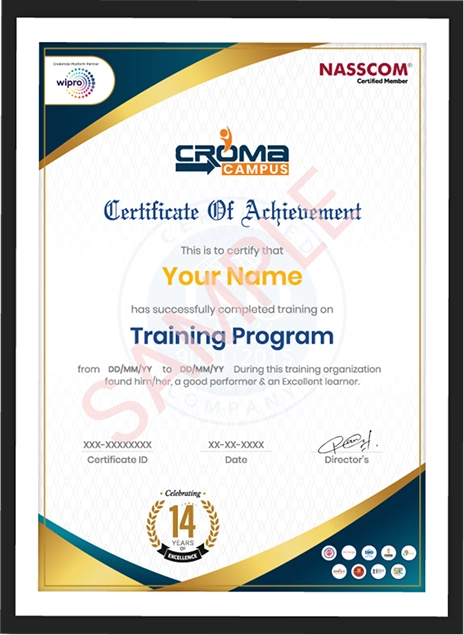
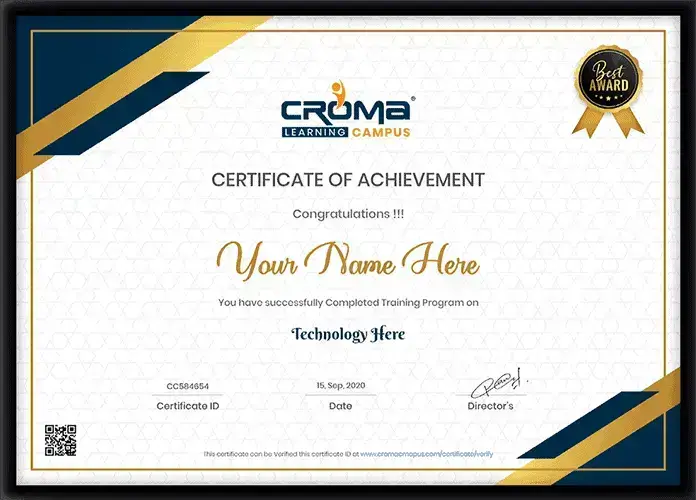
Showcase your Course Completion Certificate to Recruiters

  • checkgreenTraining Certificate is Govern By 12 Global Associations.

  • checkgreen1Training Certificate is Powered by “Wipro DICE ID”
  • checkgreen2Training Certificate is Powered by "Verifiable Skill Credentials"

in Collaboration with

dot-line
Certificate-new-file

Not Just Studying

We’re Doing Much More!

Empowering Learning Through Real Experiences and Innovation

Mock Interviews

Prepare & Practice for real-life job interviews by joining the Mock Interviews drive at Croma Campus and learn to perform with confidence with our expert team.Not sure of Interview environments? Don’t worry, our team will familiarize you and help you in giving your best shot even under heavy pressures.Our Mock Interviews are conducted by trailblazing industry-experts having years of experience and they will surely help you to improve your chances of getting hired in real.
How Croma Campus Mock Interview Works?graph_new

Not just learning

we train you to get hired.

bag-box-form
Request A Call Back

Phone (For Voice Call):

‪+91-971 152 6942‬

WhatsApp (For Call & Chat):

+91-971 152 6942
          

Download Curriculum

Get a peek through the entire curriculum designed that ensures Placement Guidance

Course Design By

nasco wp

Course Offered By

Request Your Batch Now

Ready to streamline Your Process? Submit Your batch request today!

Students Placements & Reviews

speaker
Sanchit Nuhal
Sanchit Nuhal
speaker
Vikash Singh Rana
Vikash Singh Rana
speaker
Jayad Chaurasiya
Jayad Chaurasiya
speaker
Kapil Sharma
Kapil Sharma
speaker
Prayojakta
Prayojakta
speaker
Mohammad Sar
Mohammad Sar
View More arrowicon

FAQ's

Yes, students work on practical ETL pipelines, streaming systems, and cloud-based data engineering projects.

No. Basic computer knowledge and logical thinking are enough to start learning.

Yes, the course includes Azure and AWS Databricks integration and cloud workflow practice.

Yes, Spark is covered in detail including architecture, execution flow, transformations, and optimization.

Yes, cloud data engineering and Databricks skills are highly demanded in 2026.

Career Assistancecareer assistance
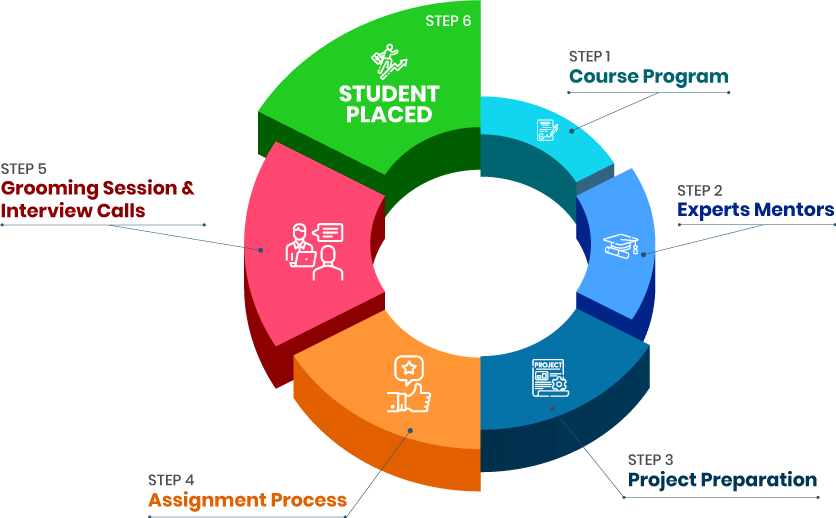
  • - Build an Impressive Resume
  • - Get Tips from Trainer to Clear Interviews
  • - Attend Mock-Up Interviews with Experts
  • - Get Interviews & Get Hired

Our learners
transformed their careers

highest
35 Laks

Highest Salary Offered

money
50%

Average Salary Hike

building
30K+

Placed in MNC’s

setting
15+

Year’s in Training

alumini
A majority of our alumni

fast-tracked into managerial careers.

Get inspired by their progress in the

Career Growth Report.

FOR VOICE SUPPORT

FOR WHATSAPP SUPPORT

sallerytrendicon1

Get Latest Salary Trends

×

For Voice Call

+91-971 152 6942

For Whatsapp Call & Chat

+91-9711526942
newwhatsapp
1
//