whatsapppopupnewiconGUIDE ME
Databricks Course

Best Databricks Course | Databricks Training with Certification

Our Databricks Course is designed for students, freshers, and working professionals who want to build strong data engineering & analytics skills using Databricks & apply them in real project environments. This Databricks Training starts with basic data concepts.
Duration: 7 – 8 Weeks | Mode: Live + Recorded Sessions

Databricks Course Demo Videos

Attend our Databricks Training demo session to understand how live classes work before you enroll in the course.

Our Recently Placed Students in Databricks Course

Shiva Bhatnagar

Placed at IBM

Anita

Placed at Deloitte

Aravindan Reddy

Placed at HCL

Vivek Mishra

Placed at Accenture

Ankita

Placed at Capgemini

Vishal

Placed at TCS

Kunal Deshpandey

Placed at Wipro

Neetu Desai

Placed at Infosys

About the Databricks Online Classes

Databricks Online Course is designed to help learners understand how large-scale data is processed, analyzed, and managed in real companies. This Databricks course focuses on Apache Spark, data pipelines, data processing, analytics, and cloud-based big data solutions. The Best Databricks Course Online is fully aligned with current industry needs.

Course Highlights – Databricks
  • Live instructor-led Databricks online classes
  • Practical training on Apache Spark, PySpark, SQL & Delta Lake
  • Real-time industry-based case studies
  • Capstone project with expert mentorship
  • Interview preparation
  • Databricks certification guidance

What You Get

  • Live instructor-led sessions
  • Recorded classes for revision
  • Practical assignments
  • Interview and resume guidance

Course Design & Approved By

Nasscom & Wipro

What Will You Learn in Databricks Course?

Our Databricks Online Training is taught slowly and clearly, so learners never feel lost. Each topic is explained in simple words with real-life data scenarios. The Databricks Online Course focus is on understanding how data platforms work in actual companies.

Core Modules Covered

  • Databricks Lakehouse architecture
  • Apache Spark fundamentals & execution
  • PySpark & Spark SQL
  • Delta Lake (ACID, time travel)
  • Data ingestion & ETL pipelines

Advanced Topics & Live Project

  • Performance tuning & cluster
  • Streaming with Structured Streaming
  • Data engineering pipelines on Databricks
  • Integration with cloud storage
  • Hands-on project with live scenarios

Download Curriculum

Get a peek through the entire curriculum designed that ensures Placement Guidance

Course Design By

nasco wp

Course Offered By

Why Choose Our Databricks Certification Training?

  • Industry-updated Databricks
  • Practical assignments
  • Complete study material & lab access
  • Mock interviews & practice sessions
  • Role based training
  • Professional-level learning

Benefits of Enrolling in Our Databricks Certification Course

  • Career-focused Databricks curriculum
  • Project-based practical learning
  • Trainers with real industry exposure
  • Cloud-based Databricks lab
  • Dedicated placement and career guide
Learners Reviews

“The interview preparation and placement support after this Databricks course were truly helpful.”

— Nidhi, Associate Data Engineer

“Recorded sessions helped me revise Databricks concepts whenever needed during this course.”

— Manoj, Analytics Professional

“Real projects in these Databricks Online Training gave me confidence to attend interviews.”

— Priyanka Singh, Data Engineer

“Live case studies made this Databricks course very practical and easy to understand.”

— Vikas Patel, Big Data Engineer

“The trainer for the Databricks Course explained Spark and Databricks concepts in very simple language, which helped me a lot as a beginner.”

— Ritika, Data Analyst Trainee

“This Databricks Online Course helped me understand big data processing clearly without confusion.”

— Amit Khanna, Junior Data Engineer
Databrick - Country-wise Job Profiles & Salary Guide

Top Job Profiles:

  • Databricks Data Engineer
  • Big Data Engineer
  • Spark Developer
  • Data Platform Engineer
  • Analytics Engineer

Average Salary Range:

  • INR 5 LPA - INR 8 LPA (Entry Level)
  • INR 10 LPA - INR 18 LPA (Mid Level)
  • INR 20 LPA - INR 35+ LPA (Senior Level)

Top Job Profiles:

  • Databricks Data Engineer
  • Big Data Engineer
  • Spark Developer
  • Data Platform Engineer
  • Analytics Engineer

Average Salary Range:

  • $100,000 - $130,000 (Entry Level)
  • $130,000 - $170,000 (Mid Level)
  • $170,000 - $210,000+ (Senior)

Top Job Profiles:

  • Databricks Data Engineer
  • Big Data Engineer
  • Spark Developer
  • Data Platform Engineer
  • Analytics Engineer

Average Salary Range:

  • £45,000 - £65,000 (Entry Level)
  • £65,000 - £90,000 (Mid-Level)
  • £90,000 - £120,000+ (Senior Level)

Top Job Profiles:

  • Databricks Data Engineer
  • Big Data Engineer
  • Spark Developer
  • Data Platform Engineer
  • Analytics Engineer

Average Salary Range:

  • EUR 65,000 - EUR 90,000 (Entry Level)
  • EUR 90,000 - EUR 125,000 (Mid-Level)
  • EUR 125,000 - EUR 160,000+ (Senior Level)

Enroll Today

Start your professional journey with our job-focused Databricks Course. Join our Databricks Course and gain practical big data skills required by top companies.

About the Trainer

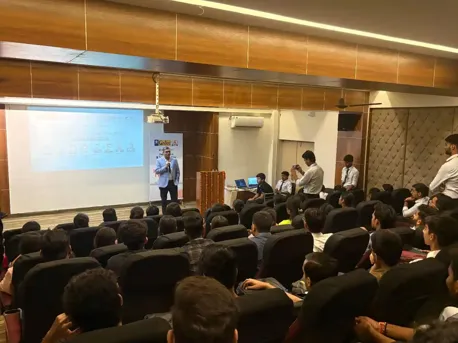
Learn in Databricks Course from a professional trainer with over 10 years of industry experience. The trainer has worked on real big data and analytics projects and trained more than 5,000+ students.
  • 10+ years of big data and Databricks experience
  • Expert in Spark, Databricks, and data pipelines
  • Conducted 100+ online and corporate batches
  • Practical and case-study-based Databricks Certification Online
  • Interview and placement guidance
Frequently Asked Questions

Yes, Databricks Certification Training is beginner-friendly and teaches everything from the basics.

Basic Python or SQL helps, but we’ll cover what you need during training.

Yes, You will get a completion certificate. You can also take official Databricks certification exams.

Yes, the course is focused on hands-on training with real data projects.

Yes, we offer full placement support including interview prep and job leads.

This Databricks Training includes Spark, Databricks Architecture, Data Processing, SQL, Delta Lake, and live projects.

Yes, this course starts from the basics and hence is suitable for a beginner.

Yes, these include notes, sessions recorded, assignments as well as project work.

Live, instructor-led Databricks Course are delivered, along with on-demand recorded sessions.

Yes, Databricks Certification Training includes resume building, as well as other forms of job assistance.

You will be working with Databricks, Apache Spark, Spark SQL, Delta Lake, and cloud infrastructure.

Yes. Databricks Certification Course describes real business data workflow and projects.

CURRICULUM & PROJECTS

Databricks Certified Data Engineer Associate Training Program

    Describe the relationship between the data lakehouse and the data warehouse.

    Identify the improvement in data quality in the data lakehouse over the data lake.

    Compare and contrast silver and gold tables, which workloads will use a bronze table as a source, which workloads will use a gold table as a source.

    Identify elements of the Databricks Platform Architecture, such as what is located in the

    data plane versus the control plane and what resides in the customer’s cloud account

    Differentiate between all-purpose clusters and jobs clusters.

    Identify how cluster software is versioned using the Databricks Runtime.

    Identify how clusters can be filtered to view those that are accessible by the user.

    Describe how clusters are terminated and the impact of terminating a cluster.

    Identify a scenario in which restarting the cluster will be useful.

    Describe how to use multiple languages within the same notebook.

    Identify how to run one notebook from within another notebook.

    Identify how notebooks can be shared with others.

    Describe how Databricks Repos enables CI/CD workflows in Databricks.

    Identify Git operations available via Databricks Repos.

    Identify limitations in Databricks Notebooks version control functionality relative to Repos.

Get full course syllabus in your inbox

    Extract data from a single file and from a directory of files

    Identify the prefix included after the FROM keyword as the data type.

    Create a view, a temporary view, and a CTE as a reference to a file

    Identify that tables from external sources are not Delta Lake tables.

    Create a table from a JDBC connection and from an external CSV file

    Identify how the count_if function and the count where x is null can be used

    Identify how the count(row) skips NULL values.

    Deduplicate rows from an existing Delta Lake table.

    Create a new table from an existing table while removing duplicate rows.

    Deduplicate a row based on specific columns.

    Validate that the primary key is unique across all rows.

    Validate that a field is associated with just one unique value in another field.

    Validate that a value is not present in a specific field.

    Cast a column to a timestamp.

    Extract calendar data from a timestamp.

    Extract a specific pattern from an existing string column.

    Utilize the dot syntax to extract nested data fields.

    Identify the benefits of using array functions.

    Parse JSON strings into structs.

    Identify which result will be returned based on a join query.

    Identify a scenario to use the explode function versus the flatten function

    Identify the PIVOT clause as a way to convert data from wide format to a long format.

    Define a SQL UDF.

    Identify the location of a function.

    Describe the security model for sharing SQL UDFs.

    Use CASE/WHEN in SQL code.

    Leverage CASE/WHEN for custom control flow.

Get full course syllabus in your inbox

    Identify where Delta Lake provides ACID transactions

    Identify the benefits of ACID transactions.

    Identify whether a transaction is ACID-compliant.

    Compare and contrast data and metadata.

    Compare and contrast managed and external tables.

    Identify a scenario to use an external table.

    Create a managed table.

    Identify the location of a table.

    Inspect the directory structure of Delta Lake files.

    Identify who has written previous versions of a table.

    Review a history of table transactions.

    Roll back a table to a previous version.

    Identify that a table can be rolled back to a previous version.

    Query a specific version of a table.

    Identify why Zordering is beneficial to Delta Lake tables.

    Identify how vacuum commits deletes.

    Identify the kind of files Optimize compacts.

    Identify CTAS as a solution.

    Create a generated column.

    Add a table comment.

    Use CREATE OR REPLACE TABLE and INSERT OVERWRITE

    Compare and contrast CREATE OR REPLACE TABLE and INSERT OVERWRITE

    Identify a scenario in which MERGE should be used.

    Identify MERGE as a command to deduplicate data upon writing.

    Describe the benefits of the MERGE command.

    Identify why a COPY INTO statement is not duplicating data in the target table.

    Identify a scenario in which COPY INTO should be used.

    Use COPY INTO to insert data.

    Identify the components necessary to create a new DLT pipeline.

    Identify the purpose of the target and of the notebook libraries in creating a pipeline.

    Compare and contrast triggered and continuous pipelines in terms of cost and latency

    Identify which source location is utilizing Auto Loader.

    Identify a scenario in which Auto Loader is beneficial.

    Identify why Auto Loader has inferred all data to be STRING from a JSON source

    Identify the default behavior of a constraint violation

    Identify the impact of ON VIOLATION DROP ROW and ON VIOLATION FAIL UPDATEfor a

    constraint violation

    Explain change data capture and the behavior of APPLY CHANGES INTO

    Query the events log to get metrics, perform audit loggin, examine lineage.

    Troubleshoot DLT syntax: Identify which notebook in a DLT pipeline produced an error,

    identify the need for LIVE in create statement, identify the need for STREAM in from clause.

Get full course syllabus in your inbox

    Identify the benefits of using multiple tasks in Jobs.

    Set up a predecessor task in Jobs.

    Identify a scenario in which a predecessor task should be set up.

    Review a task's execution history.

    Identify CRON as a scheduling opportunity.

    Debug a failed task.

    Set up a retry policy in case of failure.

    Create an alert in the case of a failed task.

    Identify that an alert can be sent via email.

Get full course syllabus in your inbox

    Identify one of the four areas of data governance.

    Compare and contrast metastores and catalogs.

    Identify Unity Catalog securables.

    Define a service principal.

    Identify the cluster security modes compatible with Unity Catalog.

    Create a UC-enabled all-purpose cluster.

    Create a DBSQL warehouse.

    Identify how to query a three-layer namespace.

    Implement data object access control

    Identify colocating metastores with a workspace as best practice.

    Identify using service principals for connections as best practice.

    Identify the segregation of business units across catalog as best practice.

Get full course syllabus in your inbox

Course Design By

naswipro

Nasscom & Wipro

Course Offered By

croma-orange

Croma Campus

Our Students' Projects
1775733250.webp
HCL Tech – Databricks Performance Optimization

Scenario: HCL Tech faced performance challenges while processing high-volume enterprise datasets.

Live Work:
  • Identifying Spark performance bottlenecks
  • Implementing memory and caching optimizations
  • Tuning cluster configurations
  • Optimizing ETL pipelines
  • Monitoring job execution metrics

Outcome: Improved job performance by 50%.

1775733164.webp
Wipro – Databricks Data Warehousing Modernization

Scenario: Wipro aimed to modernize traditional data warehouses using Databricks and cloud technologies.

Live Work:
  • Migrating warehouse data to Databricks
  • Implementing Delta Lake tables
  • Optimizing queries for analytics
  • Creating curated data layers
  • Supporting BI and reporting teams

Outcome: Reduced maintenance costs and improved.

1775733100.webp
Cognizant – Databricks Real-Time Data Pipeline

Scenario: Cognizant needed automated real-time pipelines to process and analyze continuously generated data.

Live Work:
  • Designing streaming and batch pipelines
  • Implementing Delta Lake for data consistency
  • Automating workflows using Databricks Jobs
  • Monitoring pipeline failures
  • Ensuring data accuracy

Outcome: Reduced data processing delays.

1775733032.webp
Capgemini – Databricks Cloud Analytics

Scenario: Capgemini required scalable cloud-based analytics for enterprise reporting and dashboards.

Live Work:
  • Data ingestion from cloud storage
  • Transforming data using Spark SQL
  • Creating optimized datasets for BI tools
  • Performance tuning for reporting queries
  • Managing Databricks workflows

Outcome: Improved reporting performance.

1775732946.webp
IBM – Databricks Streaming Analytics Project

Scenario: IBM needed real-time data processing to analyze streaming data from enterprise applications.

Live Work:
  • Building real-time pipelines
  • Integrating Kafka with Databricks
  • Implementing fault-tolerant streaming jobs
  • Monitoring streaming performance
  • Generating real-time analytics outputs

Outcome: Enabled near real-time insights.

1775732890.webp
TCS – Databricks Big Data Processing

Scenario: TCS required high-performance big data processing to handle large-scale transactional and log data.

Live Work:
  • Processing large datasets using Apache Spark
  • Optimizing Spark transformations and joins
  • Implementing partitioning and caching strategies
  • Monitoring cluster performance
  • Creating analytics datasets

Outcome: Improved processing efficiency by 45%.

1775732805.webp
Deloitte – Databricks Data Migration

Scenario: Deloitte needed to migrate legacy on-premise data systems to a modern cloud-based Databricks platform.

Live Work:
  • Data extraction from legacy systems
  • Migrating datasets to Databricks using Delta Lake
  • Validating and reconciling migrated data
  • Optimizing Spark jobs for cloud performance
  • Implementing data quality checks

Outcome: Successful migration with zero data loss.

1775732079.webp
Accenture – Databricks Lakehouse Implementation

Scenario: Accenture required a unified lakehouse architecture to combine data warehousing and advanced analytics for multiple enterprise clients.

Live Work:
  • Designing Databricks Lakehouse architecture
  • Implementing Delta Lake
  • Building scalable ETL pipelines using PySpark
  • Optimizing data workflows for cloud environments
  • Enabling analytics and BI reporting

Outcome: Reduced data latency by 35% and improved.

Recent Databricks Course Job Requirements
Junior Databricks Analyst

Company: Wipro

Location: Hyderabad

Experience: 0–1 Years

Required Skills: Databricks SQL, data validation, dashboard monitoring.

Databricks Trainee Data Eng.

Company: TCS

Location: Mumbai

Experience: 0–1 Years

Required Skills: PySpark basics, ETL pipeline concepts, data ingestion.

Databricks Support Engineer

Company: Infosys

Location: Bangalore

Experience: 1–3 Years

Required Skills: Databricks basics, Apache Spark fundamentals, job monitoring

Who Can Join Data Science Online Course?
  • Why : An easy way to begin the career path of working with data
  • Best Modules: Basics of Databricks, basics of Spark, working with simple data
  • Job Benefit: Begin as a junior data engineer
  • Why : Good choice for persons wishing to transition to data or analytics jobs
  • Best Modules: Data processing, Databricks projects, basic cloud concepts
  • Job Benefit: Ready for Data Engineer and Analyst Jobs
  • Why : Step-by-step learning enables easier entry into the world of data jobs
  • Best Practices: Data fundamentals, Databricks tools, basic handling of data
  • Job Benefit: Entry-level positions in data and analytics.
  • Why : Helps you work with large data systems and tools
  • Best Modules: Spark, Databricks workflows, performance optimization
  • Job Benefit: Handling data projects with confidence
  • Why : Assists in understanding how data systems are used in real work
  • Best Modules: Data pipelining, Reporting, Project flow
  • Job Benefit: Improved decision-making and team management skills
Our Related Courses

Explore in-demand tech courses to boost your career with practical skills.
SQL Online Training

Master SQL queries, joins, database management, and data analysis with practical training.

Power BI Course

Learn Power BI dashboards, reports, data modeling, and visualization with hands-on projects.
Data Analytics Course

Master Excel, SQL, Power BI, and Python to analyze data and make smart business decisions.
Data Science Course

Learn Python, Machine Learning, AI, and Data Visualization with real-time projects and placement support.

×

For Voice Call

+91-971 152 6942

For Whatsapp Call & Chat

+91-9711526942
newwhatsapp
1
//