














 Training Certificate is Govern By 12 Global Associations.







 Career Transition
 Career Gap
 Placement Activities
 Placement Drives
 Latest Hiring
 Whats App Reviews
.jpg)
.jpg)
.jpg)
.jpg)
.jpg)
.jpg)

.jpg)
.jpg)
.jpg)
Course Design By
Nasscom & Wipro
 GUIDE ME
SAP EWM Training in Delhi with practical warehouse management, inventory, logistics, implementation, and real-time project skills.
 4.2/5
4.2/5 4.8/5
4.8/5 4.6/5
4.6/5 4.3/5
4.3/5 4.5/5
4.5/5In collaboration with

Online/Offline
Format
LMS
Life Time Access
we train you to get hired.

Introduction to SAP EWM
SAP EWM and SAP S/4HANA basics
Embedded and decentralized EWM
Warehouse organizational structure
Warehouse number
Storage types
Storage sections
Storage bins
Activity areas
EWM master data
Product master
Business partner basics
Packaging specifications
Handling units
Warehouse process types
Inbound processes
Goods receipt
Putaway
Outbound processes
Picking
Packing
Goods issue
Warehouse tasks
Warehouse orders
Wave management
Understand SAP EWM basics
Understand warehouse structure
Work with warehouse master data
Understand storage types and storage bins
Understand inbound processes
Process goods receipt
Understand putaway
Understand outbound processes
Work with picking and packing
Understand goods issue
Create and manage warehouse tasks
Understand warehouse orders
Understand wave management
Understand stock movements
Perform basic inventory activities
Understand RF framework
Learn basic labor management
Understand slotting and replenishment
Understand EWM integration
Work on practical EWM projects
Live instructor-led training
Practical SAP EWM exercises
SAP S/4HANA EWM practice
Warehouse process examples
Hands-on configuration practice
Inbound process practice
Outbound process practice
Inventory practice
RF framework basics
Practical assignments
Live project work
Doubt-clearing sessions
Interview preparation
Mock interview practice
Resume guidance
Certification guidance
Placement assistance
Online learning options
Classroom learning options
Weekday and weekend batches
Fresh graduates
Students
Logistics professionals
Supply chain professionals
Warehouse professionals
Operations professionals
SAP beginners
IT professionals
Working professionals
MBA students
Job seekers
People moving into SAP careers
Logistics professionals
Supply chain professionals
Warehouse executives
Warehouse managers
Operations professionals
SAP MM professionals
SAP consultants
IT professionals
Fresh graduates
MBA students
Working professionals
Inventory professionals
Supply chain students
Job seekers
People planning a career in SAP
Students first learn what SAP EWM is and why companies use it for warehouse management. They learn basic EWM terms and understand how different warehouse processes are connected.
Warehouse number
Storage type
Storage section
Storage bin
Activity area
Staging area
Work center
Master data is needed for many warehouse processes. Students learn about product master, business partners, packaging specifications, handling units and other warehouse data.
Inbound delivery
Goods receipt
Putaway
Putaway rules
Warehouse tasks
Staging
Capacity checks
Outbound delivery
Picking
Packing
Warehouse tasks
Wave management
Goods issue
Stock removal strategies
Physical inventory
Cycle counting
Stock checking
Inventory differences
Inventory adjustments
Wave management helps group warehouse activities for processing. Students learn the basic idea of waves and how they can be used for picking and other warehouse activities on this SAP EWM Training In Delhi.
Replenishment is used when stock needs to be moved to another storage area because the available quantity is low. Students learn the basic replenishment process and how stock movement is handled.
RF means Radio Frequency. Students learn the basics of using RF devices and RF transactions for warehouse work. RF can be used for activities like picking, putaway and stock movements.
Students learn the basic idea of managing warehouse work and resources. Labor management can help companies understand warehouse workload and worker activities.
Slotting is used to decide where products should be stored in a warehouse. Students learn how product and warehouse information can be used to make storage decisions.
Students learn the basic idea of cross-docking, where goods can move through a warehouse with little or no normal storage time.
Students can learn the basics of managing activities around warehouse yards, such as vehicle movement, check-in, check-out and dock activities.
Value-added services can include work like packing, kitting and other extra warehouse activities.
Students learn how these activities can be handled on this SAP EWM Course In Delhi.
SAP EWM helps companies manage many warehouse activities in one system. It can help teams track goods from receiving to storage and then from picking to shipping.
Warehouse teams need to know where products are kept and how much stock is available. EWM helps manage stock information and warehouse movements.
Inbound, outbound, picking, packing and other warehouse activities can be handled through defined processes.
Features like warehouse tasks, RF and wave management can help organize daily warehouse work.
EWM supports physical inventory and cycle counting activities so companies can check warehouse stock.
SAP EWM is made for detailed warehouse processes and can support complex warehouse operations.
SAP EWM Consultant
SAP EWM Functional Consultant
SAP EWM Support Consultant
SAP EWM Analyst
SAP Warehouse Management Consultant
SAP Supply Chain Consultant
SAP Logistics Consultant
SAP EWM Implementation Consultant
Warehouse Management System Consultant
SAP Functional Consultant
An SAP EWM consultant works with warehouse processes, SAP EWM configuration, testing and business requirements.
A functional consultant works with warehouse processes and helps configure SAP EWM according to business needs.
A support consultant helps users solve SAP EWM problems and checks issues related to configuration, data and warehouse processes.
An analyst can work with warehouse data, SAP processes, reports and business requirements.
A supply chain consultant can work with SAP processes related to warehouse, inventory and supply chain activities.
A logistics consultant works with SAP processes related to logistics, warehouse and material movement.
Used for managing warehouse activities and processes.
Students learn the basics of EWM in the S/4HANA environment.
Used to check and monitor warehouse activities.
Used for mobile and radio-frequency based warehouse work.
Used to maintain important product information for warehouse processes.
Used to define warehouse numbers, storage types, storage sections and bins.
Used to manage activities such as picking, putaway and stock movement.
Used to group warehouse tasks and organize work.
Used to group and manage warehouse activities.
Used to check and manage warehouse stock.
Used to understand and manage warehouse resources and work.
Used to manage basic yard-related warehouse activities.
Used to check warehouse information and activities
Students work on warehouse numbers, storage types, storage sections and storage bins.
Students practice creating and maintaining important warehouse master data.
Students work on a basic goods receipt and putaway process.
Students practice an outbound process from delivery to picking and shipping.
Students learn how warehouse tasks are created and processed.
Students practice physical inventory and stock checking activities.
Students learn the basic use of RF-based warehouse processes.
Students combine different EWM processes and work on a complete warehouse scenario.
Creating warehouse structures
Working with storage types
Creating storage bins
Managing product information
Processing goods receipt
Performing putaway
Creating warehouse tasks
Processing outbound deliveries
Picking products
Packing products
Posting goods issue
Managing stock
Performing inventory checks
Working with waves
Understanding replenishment
Using RF processes
Checking warehouse monitor
Understanding integration
Finding basic process issues
Total course duration
Number of training hours
Practical system access
Topics covered
Projects included
Trainer experience
Certification guidance
Placement support
Online or classroom mode
Course duration
Online or classroom training
Live SAP system access
Practical sessions
Number of projects
Trainer experience
Certification guidance
Placement support
Knowing warehouse structure, inbound, outbound, inventory, RF and other EWM topics can help you understand the work better.
Practical work is important because SAP jobs involve real business processes and system activities.
Projects can help students understand how different EWM processes work together.
Learning how EWM works with SAP S/4HANA can be useful for people entering modern SAP environments.
Basic knowledge of logistics, inventory and warehouse operations can make EWM topics easier to understand.
SAP consultants need to understand requirements and explain problems and solutions clearly.
People with experience in SAP MM, SD or other related areas may have a different learning path compared with complete beginners.
Live instructor-led training
Practical EWM exercises
SAP S/4HANA practice
Real warehouse examples
Practical assignments
Project work
Doubt-clearing sessions
Interview preparation
Mock interviews
Resume guidance
Certification guidance
Placement assistance
Flexible learning options
Topics are explained in easy language so students can understand them step by step.
Students practice warehouse processes instead of only reading theory.
Students work on warehouse-based projects to understand real work situations.
Trainers explain the concepts as well as the practical steps.
Students can ask questions when they face problems during practice.
Students can practice questions related to SAP EWM, warehouse processes and projects.
Students can get help in adding their SAP EWM skills and project work to their resume.
Important EWM topics can be revised for certification preparation.
Students can get support with job search, interview preparation and career guidance.
we train you to get hired.
By registering here, I agree to Croma Campus Terms & Conditions and Privacy Policy
+ More Lessons
Course Design By
Nasscom & Wipro
Course Offered By
Croma Campus
Stories
success
inspiration
career upgrade
career upgrade
career upgrade
career upgrade
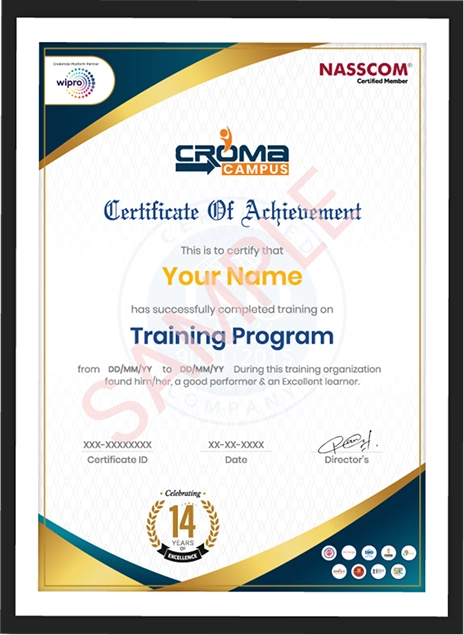
You will get certificate after
completion of program
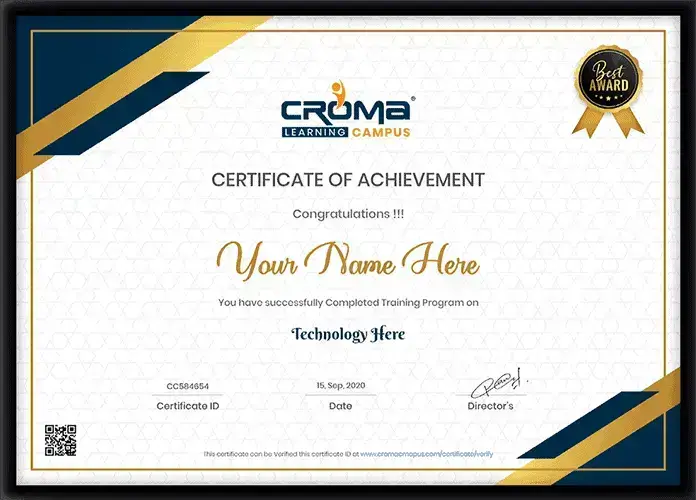
You will get certificate after
completion of program
You will get certificate after
completion of program
in Collaboration with
Empowering Learning Through Real Experiences and Innovation
we train you to get hired.
Phone (For Voice Call):
+91-828 706 0032WhatsApp (For Call & Chat):
+91-828 706 0032Get a peek through the entire curriculum designed that ensures Placement Guidance
Course Design By
Course Offered By
Ready to streamline Your Process? Submit Your batch request today!
SAP EWM stands for SAP Extended Warehouse Management. It is used to manage warehouse processes such as receiving, storing, picking, packing and shipping goods.
SAP EWM has many topics, so it can look difficult in the beginning. Regular practice can make the concepts easier to understand.
Yes. Freshers can join the course if they have basic computer knowledge and an interest in SAP, logistics or warehouse management.
SAP EWM is mainly focused on warehouse processes and functional work. Coding is not the main requirement for many functional EWM roles.
SAP EWM provides more detailed warehouse management functions and supports areas such as warehouse tasks, RF, inventory, labor and other warehouse activities.
A warehouse number is used to represent a warehouse in SAP EWM. Other warehouse structures are connected to it.
Putaway is the process of moving received goods to the correct storage location in the warehouse.
Picking means taking the required products from their storage locations for an outbound order.
Yes. Inbound and outbound processes are important parts of SAP EWM training.
Yes. Students learn how warehouse tasks are used for activities such as picking, putaway and stock movement.
Yes. The course can cover physical inventory, cycle counting and basic stock checking processes.
RF means Radio Frequency. It is used for mobile warehouse activities and helps warehouse workers perform tasks through RF devices.
Yes. Current SAP EWM training includes SAP S/4HANA and concepts related to embedded and decentralized EWM.
Yes. Basic EWM integration with other SAP areas such as MM and SD can be included in the course.
Yes. Students can work on projects related to warehouse structure, inbound, outbound, inventory and other EWM processes.
Yes. Logistics and warehouse professionals can learn SAP EWM to understand how SAP is used in warehouse operations.
Yes. SAP MM professionals can learn EWM because warehouse processes are connected with material and supply chain activities.
Certification guidance can be provided as part of the training. Students should check with the institute whether the certification exam fee is included separately.
Placement assistance may include resume support, interview preparation and career guidance. Students should check the exact placement services offered by the institute before joining.
The SAP EWM Classes in Delhi can help students learn warehouse management processes, practice SAP EWM and understand how SAP is used in logistics and supply chain work.


Highest Salary Offered

Average Salary Hike

Placed in MNC’s

Year’s in Training

fast-tracked into managerial careers.
Get inspired by their progress in the
Career Growth Report.
FOR QUERIES, FEEDBACK OR ASSISTANCE
Best of support with us
Share some of your details and we will be in touch with you for demo details, and know about Batches Available with us!
By registering here, I agree to Croma Campus Terms & Conditions and Privacy Policy


For Voice Call
+91-971 152 6942For Whatsapp Call & Chat
+91-9711526942Share some of your details and we will be in touch with you for demo details, and know about Batches Available with us!



.jpg)




.webp)














.webp)






















 +91-828 706 0032
 +91-828 706 0032


 +91-828 706 0032
 +1 (782) 819-0044





 Interested in Course?



.webp)
.webp)

.png)


