






whatsapppopupnewiconGUIDE ME

Become a project management expert. Join to learn under the guidance of a PMP expert.

4.9 out of 5 based on 15987 votes
google4.2/5
Sulekha4.8/5
Urbonpro4.6/5
Just Dial4.3/5
Fb4.5/5

In collaboration with

400+

Corp. Tie-Ups

Online/Offline

Format

LMS

Life Time Access

Book A Free Counselling Session

we train you to get hired.

bag-box-form
Request more information_

  • Management of the project means proper planning and control of activities aimed at achieving a certain goal. It is utilized in cases when an organization has to deliver something within a certain period of time, budget, quality and requirements. The project may vary greatly from the development and launch of a software product to implementation of a new banking system, construction of production facilities, moving to cloud computing, design of websites and internal process changes within the company. The variety of activities is quite significant; however, the management issues remain more or less the same.
  • Somebody has to address questions like the following:
    • What precisely needs to be delivered

      Who will perform which task

      What is the price

      What could possibly happen

      What people should be included

      What happens if requirements change

      Does the project still have the anticipated business value

  • And here the professional project management comes into play. Nowadays organizations do not require only people who can distribute the tasks. They need professionals who can relate the team's work to the business objectives. PMP Online Training should also emphasize people, processes, business environment, leadership, stakeholder management, and value delivery.

PMP Online Training

About-Us-Course

  • Project management on a professional level ensures that projects are completed in an orderly and organized manner. It also ensures effective management of time, cost, resources, risks, and changing requirements of projects.
    • Better planning and execution of projects

      Efficient utilization of time, cost, and resources

      Roles and responsibilities of team members clearly defined

      Effective communication with clients and stakeholders

      Identification of risks and problems at early stages

      Faster and more effective decision-making

      More control over scope and changes in the project

      Greater probability of realizing business benefits

  • PMP means Project Management Professional. This is a globally accepted certification by PMI for validating the project management skills and experience of a professional. It applies to the IT industry, banking industry, healthcare sector, construction sector, manufacturing industry, and others.
  • Understanding of the Professional Certification
    • PMP includes all important skills required for effective project management.

      Project planning and implementation

      Project team and stakeholder management

      Risk and issue management

      Strategic management

  • Advantages of Professional Certification
  • Preparing for PMP may be beneficial in improving project management skills and career advancement.
    • Effective project planning and monitoring

      Effective leadership and communication

      Effective decision making

      Enhancing professional reputation

      Career advancement in project management

      Management skills

  • The certification will assist you in improving your skills in managing projects and learning the practical approaches of project management. The certification can enhance your professional profile as well as assist in your professional development.
  • Develop Advanced Project Management Skills
    • Enhance your planning and project management skills.

      Enhance your leadership and communication skills.

      Take effective decisions in project activities.

  • Broaden Your Professional Scope
    • Enhance your reputation and confidence in your organization.

      Learn about project management careers in various industries.

      Increase the possibility of career development.

      Gain useful skills such as planning, decision making, etc.

  • PMP Online Course covers the main skills needed to plan, manage, and deliver projects successfully. You will learn both traditional and modern project management methods used in different work environments.
  • Project Management Fundamentals
    • Project life cycle and planning

      Project objectives and strategic alignment

      Scope, schedule, and cost management

      Performance monitoring

  • Quality, Resources, and Communication
    • Quality planning and control

      Resource management

      Team communication and coordination

  • Risk and Stakeholder Management
    • Risk identification and response

      Stakeholder engagement

      Managing project expectations

  • Modern Project Management Approaches
    • Predictive project planning

      Agile and iterative delivery

      Hybrid project management

      Managing changing project requirements

  • The content of the course includes all important aspects of project management, from fundamental concepts to the principles of leadership, project delivery and business environment.
  • Principles of Project Management
    • Get familiar with the basics of project management and its terminology.

      Study the objectives and the strategy of the organization and the project.

      Learn professional ethics and best practices.

  • People and Leadership
    • Learn how to create efficient project teams.

      Study leadership and conflict management.

      Improve your skills in communication and teamwork.

      Learn how to manage and engage stakeholders.

  • Project Delivery and Process
    • Learn about project planning and delivery processes.

      Understand how the project performance is measured.

      Learn the basics of quality management and control.

      Identify and manage risks and issues of the project.

  • Business Environment
    • Learn about business value and its connection to the project.

      Understand how organizations deal with changes.

      Study compliance and project governance.

      Make connections between project and business decisions.

  • Real-World Project Scenarios: PMP learning becomes easier when learners work through situations instead of only reading definitions. A practical session may ask:
  • A supplier tells the project manager that an important delivery will be two weeks late. What should happen first The learner should think about impact, available options, risks, stakeholders, and the project plan before selecting an answer. This is closer to the way PMP questions are written.
  • Case Studies and Simulations
  • Case studies can include:
    • Business case review

      Project planning

      Risk assessment

      Scope change

      Team conflict

      Stakeholder disagreement

      Supplier problems

      Schedule delays

      Quality problems

  • The PMP examination changed in July 2026. The current exam has 180 questions and four hours of exam time. The current domain weighting is People 33%, Process 41%, and Business Environment 26%. The updated exam also gives more attention to AI, sustainability, stakeholder engagement, outcomes, value, and business impact. So, learners preparing in 2026 should make sure they are using current study material. Older videos or notes may not fully match the updated exam.
  • Practice should happen throughout the course. A useful assessment system can include:
    • Topic-wise questions

      Scenario-based questions

      Timed tests

      Full mock exams

      Answer explanations

      Weak-area reports

      Revision tests

  • PMI's own practice exam uses a full 180-question simulation and gives performance results to help learners identify gaps.
  • Exam Preparation Strategies
  • Do not wait until the final week to start solving questions.
  • A better method is:
    • Learn one topic.

      Solve questions on that topic.

      Check wrong answers.

      Understand why the answer was wrong.

      Note the weak area.

      Revise it later.

      Repeat with another topic.

  • For scenario questions, do not select an answer just because it contains words such as immediately, escalate, or communicate. Read the complete situation. Look at what has happened, who is involved, what the project manager knows, and what action should logically come next.

  • PMP preparation can be useful for:
    • Project managers

      Project coordinators

      Team leaders

      Delivery professionals

      Business analysts

      Product professionals

      IT professionals

      Operations professionals

      Consultants

  • It can also help experienced professionals who already manage project work but want a formal certification.
  • Professionals Moving into Project Management
  • A person does not always have Project Manager written on their job title to gain project experience. Some professionals manage project tasks, teams, schedules, vendors, releases, business changes, or delivery work as part of another role. Such professionals can explore whether their experience meets PMI's current eligibility rules before applying.

  • PMP certification has specific eligibility rules.
  • Secondary school diploma: 60 months of experience leading projects.
  • Associate degree or vocational qualification: 48 months of project experience.
  • Bachelors degree or higher: 36 months of project experience.
  • PMI GAC-accredited degree: 24 months of project experience.
  • Training requirement: 35 hours of project management education or an active CAPM certification.
  • Because eligibility rules can change, learners should check the current PMI requirements before submitting an application.
  • Recommended Preparation
  • Before joining a PMP Training Course Online, it helps to have:
    • Basic project management understanding

      Some project-related work experience

      Regular study time

      Willingness to solve practice questions

      Interest in leadership and business work

  • A PMP certificate will assist professionals in creating a profile that is more appealing for project positions in various fields. It will also be helpful for individuals who wish to undertake more significant projects and teams.
  • Project Management Roles: PMP certification can support career paths such as:
    • Project Manager

      Program Manager

      Project Coordinator

      Delivery Manager

      PMO Professional

  • Leadership and Specialized Roles: Project management skills can also support:
    • Scrum Master

      Project Consultant

      Program leadership

      Operations leadership

      Transformation roles

      PMO management

  • The need for project management skills arises due to the frequent handling of projects and business changes by companies. PMP trained professionals have an array of options in both technical and non-technical areas.
  • Technology and IT
  • Technology companies run many types of projects, including:
    • Software development

      Cloud migration

      Cybersecurity programs

      Data projects

      Digital transformation

      Infrastructure upgrades

      Product launches

  • Other Major Industries
  • Project management is also used in:
    • Banking

      Healthcare

      Construction

      Engineering

      Manufacturing

      Telecommunications

      Consulting

      Retail

      Energy

  • This is one reason PMP Online Training In India can attract professionals from different backgrounds rather than only IT professionals.

  • The benefits of PMP Certification are that it will provide the individual with increased project management knowledge and increased job responsibilities. It will also contribute to career development through leadership, planning, communication, and decision-making skills.
  • Strengthen Your Professional Profile: Certification can show that a professional has studied structured project management practices but the certificate should not be treated as a replacement for real project experience. A strong profile usually combines:
    • Experience

      Project Skills

      Certification

      Communication

      Leadership

  • This combination is more useful than a certificate alone.
  • Develop Transferable Skills: Project management teaches skills that can be used outside a project manager's job title.
  • These include:
    • Communication

      Leadership

      Negotiation

      Problem-solving

      Decision-making

      Planning

      Stakeholder management

      Strategic thinking

  • Online learning can be useful for working professionals because the learner does not need to travel to a classroom. PMP Online Classes may be conducted through live instructor-led sessions, online discussions, digital study material, practice tests, and revision sessions. Some learners prefer weekend classes. Others prefer weekday sessions. The best option is the one that fits the learner's working schedule and allows enough time for practice. PMI itself provides both online and instructor-led preparation options, including online training through its Authorized Training Partner network.
  • Digital Learning Resources
  • A useful online course may include:
    • Digital study material

      Recorded sessions were offered

      Practice questions

      Mock tests

      Revision notes

      Online assessments

      Doubt-solving sessions

  • The learner should not judge an online course only by the number of videos. The quality of questions, explanations, trainer support, updated content, and practice work matters more.

  • A good preparation plan should guide the learner from learning to exam readiness.
  • It may include:
    • Study roadmap

      Topic-wise learning

      Practice tests

      Mock exams

      Revision plans

      Exam application guidance

      Weak-area improvement

  • PMI states that its official PMP Exam Prep course provides the 35 training hours required to apply and is aligned with the PMP Exam Content Outline.
  • Some training providers also offer career support.
  • This can include:
    • Resume guidance

      Interview preparation

      Project management career guidance

      Profile improvement

      Job-oriented advice

  • If a course is advertised as a PMP Online Course with Placement, learners should check exactly what placement means. Ask whether it means job referrals, interview support, resume help, or an actual employment guarantee. These are not the same thing.

  • Preparation should be done with an easy strategy, continuous practice, and proper revision. Rather than just reading the topic, concentrate on grasping scenarios and implementing the concepts of project management.
  • Plan for Constant Study
    • Fix goals for every week and achieve them in time.

      Maintain fixed hours for studying in order to prepare consistently.

      Monitor your performance and modify your strategy if required.

  • Practice Scenario-Based Questions
    • First, read the whole scenario before answering the question.

      Implement project management concepts rather than mugging up definitions.

      Verify the explanation after every practice test.

  • Assess Your Performance
    • Go for mock tests continuously to evaluate your preparation level.

      Find out weak areas and work harder on them.

      Revisit the concepts that you find difficult before starting new topics.

  • Preparation for the PMP exam is a tough process when you are managing your work, gaining knowledge in new areas, and solving mock questions. Understanding some typical issues can assist you in preparing for the exam in an effective manner.
  • Work Management and Preparation
  • Managing work and preparing for the PMP exam may be quite tricky. An efficient schedule of study can help you prepare for the exam while doing your work.
    • Prepare a realistic study schedule considering your work.

      Give regular time for preparation instead of cramming the day before the exam.

      Make use of flexible online resources when your schedule is tight because of your work.

  • Understanding Scenario-Based Questions
  • Project Management Professionals' questions usually test your capability to deal with actual project situations, and not your memory. Therefore, read the question carefully and understand the situation before giving an answer.
    • Read the question carefully before answering.

      Consider the project situation, stakeholders, and constraints.

      Choose an appropriate project management principle.

      Do not choose an answer based on any keywords used in it.

  • That way of thinking is useful long after the examination is over. A PMP Training Course Online can be the starting point, but the real growth comes when the learner takes these ideas into actual project work. With regular practice, real project exposure, and updated exam preparation, professionals can build a stronger foundation for project management and future leadership roles. One important 2026 point: PMI changed the PMP examination in July 2026, so anyone preparing now should use current 2026-aligned study material rather than depending only on older PMP videos, notes, or question banks.

Why should you learn PMP?

Not just learning

we train you to get hired.

bag-box-form
Request more information

By registering here, I agree to Croma Campus Terms & Conditions and Privacy Policy

CURRICULUM & PROJECTS

PMP Exam Training Program

    Master the best PMP skills by getting practical Project Management Training under top industry educators.

    • Domain I
      • Manage conflict
      • Lead a team
      • Support team performance
      • Empower team members and stakeholders
      • Ensure team members/stakeholders are adequately trained
      • Build a team
      • Address and remove impediments, obstacles, and blockers for the team
      • Negotiate project agreements
      • Collaborate with stakeholders
      • Build shared understanding
      • Engage and support virtual teams
      • Define team ground rules
      • Mentor relevant stakeholders
      • Promote team performance through the application of emotional intelligence
    • Domain II
      • Execute project with the urgency required to deliver business value
      • Manage communications
      • Assess and manage risks
      • Engage stakeholders
      • Plan and manage budget and resources
      • Plan and manage schedule
      • Plan and manage quality of products/deliverables
      • Plan and manage scope
      • Integrate project planning activities
      • Manage project changes
      • Plan and manage procurement
      • Manage project artifacts
      • Determine appropriate project methodology/methods and practices
      • Establish project governance structure
      • Manage project issues
      • Ensure knowledge transfer for project continuity
      • Plan and manage project/phase closure or transitions
    • Domain III
      • Plan and manage project compliance
      • Evaluate and deliver project benefits and value
      • Evaluate and address external business environment changes for impact on scope
      • Support organizational change
Get full course syllabus in your inbox

    Domain I

    Manage conflict

    • Interpret the source and stage of the conflict
    • Analyze the context for the conflict
    • Evaluate/recommend/reconcile the appropriate conflict resolution solution

    Lead a team

    • Set a clear vision and mission
    • Support diversity and inclusion (e.g., behavior types, thought process)
    • Value servant leadership (e.g., relate the tenets of servant leadership to the team)
    • Determine an appropriate leadership style (e.g., directive, collaborative)
    • Inspire, motivate, and influence team members/stakeholders (e.g., team contract, social contract, reward system)
    • Analyze team members and stakeholders’ influence
    • Distinguish various options to lead various team members and stakeholders

    Support team performance

    • Appraise team member performance against key performance indicators
    • Support and recognize team member growth and development
    • Determine appropriate feedback approach
    • Verify performance improvements

    Empower team members and stakeholders

    • Organize around team strengths
    • Support team task accountability
    • Evaluate demonstration of task accountability
    • Determine and bestow level(s) of decision-making authority

    Ensure team members/stakeholders are adequately trained

    • Determine required competencies and elements of training
    • Determine training options based on training needs
    • Allocate resources for training
    • Measure training outcomes

    Build a team

    • Appraise stakeholder skills
    • Deduce project resource requirements
    • Continuously assess and refresh team skills to meet project needs
    • Maintain team and knowledge transfer

    Address and remove impediments, obstacles, and blockers for the team

    • Determine critical impediments, obstacles, and blockers for the team
    • Prioritize critical impediments, obstacles, and blockers for the team
    • Use network to implement solutions to remove impediments, obstacles, and blockers for the team
    • Re-assess continually to ensure impediments, obstacles, and blockers for the team are being addressed

    Negotiate project agreements

    • Analyze the bounds of the negotiations for agreement
    • Assess priorities and determine ultimate objective(s)
    • Verify objective(s) of the project agreement is met
    • Participate in agreement negotiations
    • Determine a negotiation strategy

    Collaborate with stakeholders

    • Evaluate engagement needs for stakeholders
    • Optimize alignment between stakeholder needs, expectations, and project
    • objectives
    • Build trust and influence stakeholders to accomplish project objectives

    Build shared understanding

    • Break down situation to identify the root cause of a misunderstanding
    • Survey all necessary parties to reach consensus
    • Support outcome of parties' agreement
    • Investigate potential misunderstandings

    Engage and support virtual teams

    • Examine virtual team member needs (e.g., environment, geography,
    • culture,global, etc.)
    • Investigate alternatives (e.g., communication tools, colocation) for virtual team member engagement
    • Implement options for virtual team member engagement
    • Continually evaluate effectiveness of virtual team member engagement

    Define team ground rules

    • Communicate organizational principles with team and external stakeholders
    • Establish an environment that fosters adherence to the ground rules
    • Manage and rectify ground rule violations

    Mentor relevant stakeholders

    • Allocate the time to mentoring
    • Recognize and act on mentoring opportunities

    Promote team performance through the application of emotional intelligence

    • Assess behavior through the use of personality indicators
    • Analyze personality indicators and adjust to the emotional needs of key project stakeholders
Get full course syllabus in your inbox

    Domain II

    • Execute project with the urgency required to deliver business value
    • Assess opportunities to deliver value incrementally
    • Examine the business value throughout the project
    • Support the team to subdivide project tasks as necessary to find the mini mum viable product

    Manage communications

    • Analyze communication needs of all stakeholders
    • Determine communication methods, channels, frequency, and level of
    • detail for all stakeholders
    • Communicate project information and updates effectively
    • Confirm communication is understood and feedback is received

    Assess and manage risks

    • Determine risk management options
    • Iteratively assess and prioritize risks

    Engage stakeholders

    • Analyze stakeholders (e.g., power interest grid, influence, impact)
    • Categorize stakeholders
    • Engage stakeholders by category
    • Develop, execute, and validate a strategy for stakeholder engagement

    Plan and manage budget and resources

    • Estimate budgetary needs based on the scope of the project and lessons learned from past projects
    • Anticipate future budget challenges
    • Monitor budget variations and work with governance process to adjust as necessary
    • Plan and manage resource

    Plan and manage schedule

    • Estimate project tasks (milestones, dependencies, story points)
    • Utilize benchmarks and historical data
    • Prepare schedule based on methodology
    • Measure ongoing progress based on methodology
    • Modify schedule, as needed, based on methodology
    • Coordinate with other projects and other operations

    Plan and manage quality of products/deliverables

    • Determine quality standard required for project deliverables
    • Recommend options for improvement based on quality gaps
    • Continually survey project deliverable quality

    Plan and manage scope

    • Determine and prioritize requirements
    • Break down scope (e.g., WBS, backlog)
    • Monitor and validate scope

    Integrate project planning activities

    • Consolidate the project/phase plans
    • Assess consolidated project plans for dependencies, gaps, and continued business value
    • Analyze the data collected
    • Collect and analyze data to make informed project decisions
    • Determine critical information requirements

    Manage project changes

    • Anticipate and embrace the need for change (e.g., follow change management practices)
    • Determine strategy to handle change
    • Execute change management strategy according to the methodology
    • Execute change management strategy according to the methodology
    • Determine a change response to move the project forward

    Plan and manage procurement

    • Define resource requirements and needs
    • Communicate resource requirements
    • Manage suppliers/contracts
    • Plan and manage procurement strategy
    • Develop a delivery solution

    Manage project artifacts

    • Determine the requirements (what, when, where, who, etc.) for managing the project artifacts
    • Validate that the project information is kept up to date (i.e., version control) and accessible to all stakeholders
    • Continually assess the effectiveness of the management of the project artifacts

    Determine appropriate project methodology/methods and practices

    • Assess project needs, complexity, and magnitude
    • Recommend project execution strategy (e.g., contracting, finance)
    • Recommend a project methodology/approach (i.e., predictive, agile,hybrid)
    • Use iterative, incremental practices throughout the project life cycle (e.g.,lessons learned, stakeholder engagement, risk)

    Establish project governance structure

    • Determine appropriate governance for a project (e.g., replicate organizational governance)
    • Define escalation paths and thresholds

    Manage project issues

    • Recognize when a risk becomes an issue
    • Attack the issue with the optimal action to achieve project success
    • Collaborate with relevant stakeholders on the approach to resolve the issuesy

    Ensure knowledge transfer for project continuity

    • Discuss project responsibilities within team
    • Outline expectations for working environment
    • Confirm approach for knowledge transfers

    Plan and manage project/phase closure or transitions

    • Determine criteria to successfully close the project or phase
    • Validate readiness for transition (e.g., to operations team or next phase)
    • Conclude activities to close out project or phase (e.g., final lessons learned,retrospective, procurement, financials, resources)
Get full course syllabus in your inbox

    Domain III

    Plan and manage project compliance

    • Confirm project compliance requirements (e.g., security, health and safety,regulatory compliance)
    • Classify compliance categories
    • Determine potential threats to compliance
    • Use methods to support compliance
    • Analyze the consequences of noncompliance
    • Determine necessary approach and action to address compliance needs(e.g.,risk, legal)
    • Measure the extent to which the project is in compliance

    Evaluate and deliver project benefits and value

    • Investigate that benefits are identified
    • Document agreement on ownership for ongoing benefit realization
    • Verify measurement system is in place to track benefits
    • Evaluate delivery options to demonstrate value
    • Appraise stakeholders of value gain progress

    Evaluate and address external business environment changes for impact on scope

    • Survey changes to external business environment (e.g., regulations, tech nology, geopolitical, market)
    • Assess and prioritize impact on project scope/backlog based on changes in external business environment
    • Recommend options for scope/backlog changes (e.g., schedule, cost changes)
    • Continually review external business environment for impacts on project scope/backlog

    Support organizational change

    • Assess organizational culture
    • Evaluate impact of organizational change to project and determine required actions
    • Evaluate impact of the project to the organization and determine required actions
Get full course syllabus in your inbox

Course Design By

naswipro

Nasscom & Wipro

Course Offered By

croma-orange

Croma Campus

Real

star

Stories

success

inspiration

person1

Jitesh Verma

career upgrade

person1

Maan Thakur

career upgrade

person1

Divesh Thakur

career upgrade

person1

Sristi Sharma

career upgrade

SELF ASSESSMENT

Learn, Grow & Test your skill with Online Assessment Exam to
achieve your Certification Goals

right-selfassimage
Get exclusive
access to career resources
upon completion
quote
Mock Session

You will get certificate after
completion of program

laptop
LMS Learning

You will get certificate after
completion of program

star
Career Support

You will get certificate after
completion of program

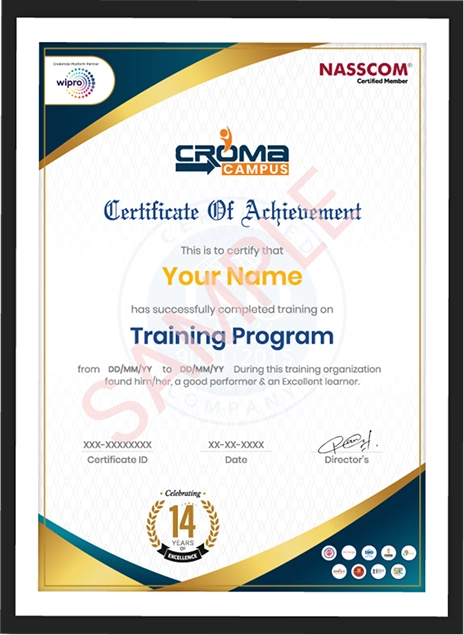
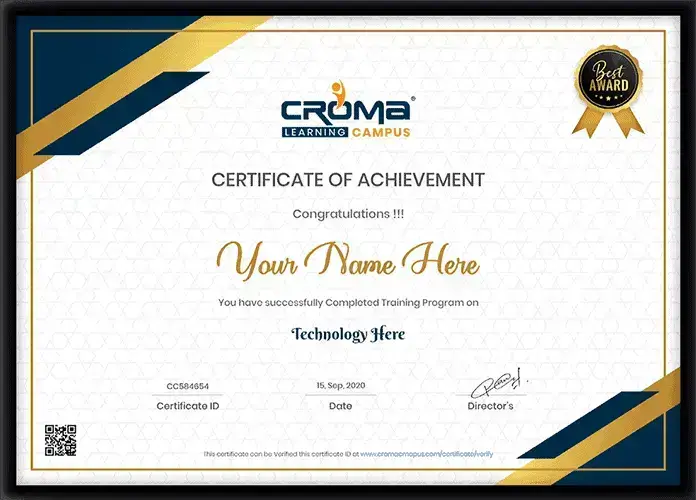
Showcase your Course Completion Certificate to Recruiters

  • checkgreenTraining Certificate is Govern By 12 Global Associations.

  • checkgreen1Training Certificate is Powered by “Wipro DICE ID”
  • checkgreen2Training Certificate is Powered by "Verifiable Skill Credentials"

in Collaboration with

dot-line
Certificate-new-file

Not Just Studying

We’re Doing Much More!

Empowering Learning Through Real Experiences and Innovation

Mock Interviews

Prepare & Practice for real-life job interviews by joining the Mock Interviews drive at Croma Campus and learn to perform with confidence with our expert team.Not sure of Interview environments? Don’t worry, our team will familiarize you and help you in giving your best shot even under heavy pressures.Our Mock Interviews are conducted by trailblazing industry-experts having years of experience and they will surely help you to improve your chances of getting hired in real.
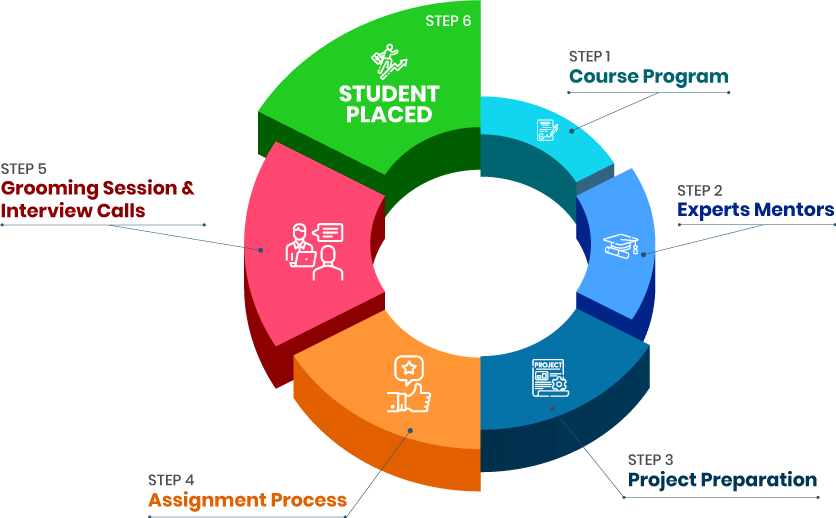
How Croma Campus Mock Interview Works?graph_new

Not just learning

we train you to get hired.

bag-box-form
Request A Call Back

Phone (For Voice Call):

‪+91-828 706 0032

WhatsApp (For Call & Chat):

+91-828 706 0032
          

Download Curriculum

Get a peek through the entire curriculum designed that ensures Placement Guidance

Course Design By

nasco wp

Course Offered By

Request Your Batch Now

Ready to streamline Your Process? Submit Your batch request today!

Students Placements & Reviews

speaker
Prayojakta
Prayojakta
speaker
Sanchit Nuhal
Sanchit Nuhal
speaker
Jayad Chaurasiya
Jayad Chaurasiya
speaker
Kapil Sharma
Kapil Sharma
speaker
Saurav Kumar
Saurav Kumar
speaker
Harikesh Panday
Harikesh Panday
View More arrowicon

FAQ's

The PMP exam consists of 200 multiple-choice questions, which must be completed within 4 hours.

The passing score for the PMP exam is determined by PMI and varies from exam to exam.

You can prepare for the PMP exam by enrolling in PMP project management professional online training.

The cost of PMP training varies depending on the provider, course format, and location.

PMP is a professional certification from PMI that shows your knowledge and skills in managing projects.

It is useful for project managers, team leaders, business analysts, IT professionals, and others working on projects.

Eligibility depends on your education, project experience, and project management training as set by PMI.

The program covers planning, scope, cost, schedule, risk, quality, teams, stakeholders, and different project methods.

Yes, online learning lets working professionals’ study from home and attend classes without leaving their regular work.

Preparation includes learning the topics, solving practice questions, taking mock tests, and revising weak areas.

Professionals can explore roles such as Project Manager, Project Coordinator, Program Manager, Delivery Manager, and PMO Professional.

Mock tests help you understand your weak areas, improve speed, and become more comfortable with exam-style questions.

Predictive uses detailed planning, Agile works in small cycles, while Hybrid combines both approaches based on project needs.

Start by checking PMI eligibility, choosing updated training material, making a study plan, and practicing regularly.

Career Assistancecareer assistance
  • - Build an Impressive Resume
  • - Get Tips from Trainer to Clear Interviews
  • - Attend Mock-Up Interviews with Experts
  • - Get Interviews & Get Hired

Our learners
transformed their careers

highest
35 Laks

Highest Salary Offered

money
50%

Average Salary Hike

building
30K+

Placed in MNC’s

setting
15+

Year’s in Training

alumini
A majority of our alumni

fast-tracked into managerial careers.

Get inspired by their progress in the

Career Growth Report.

FOR VOICE SUPPORT

FOR WHATSAPP SUPPORT

sallerytrendicon1

Get Latest Salary Trends

×

For Voice Call

+91-971 152 6942

For Whatsapp Call & Chat

+91-9711526942
newwhatsapp
1
//